Tiny Hives Update with Sherry (295)
Jim Tew visits several small summer colonies—including one established for his longtime colleague Sherry—to evaluate how they’re progressing late in the season. The inspections lead to a discussion about after swarms, virgin queens, colony survival, entrance observations, and the reality that not every swarm succeeds. Jim also reflects on a surprising overwintered nuc and shares thoughts on learning from both successful and unsuccessful colonies.

 Apple Podcasts
 YouTube
 Spotify
 Amazon Music
 Overcast
 Castro
 RSS Feed
 Not every colony survives—and sometimes the best lesson comes from the colonies that don’t. This week on Honey Bee Obscura, Jim Tew provides tiny hives update for the listeners and decribes how they’re progressing as July draws to a close. One of those colonies belongs to his longtime colleague, Sherry, who rescued a very small swarm earlier in the season. Unfortunately, what Jim finds is a sobering reminder that small, late-season colonies often face overwhelming odds. Mouse activity, almost no 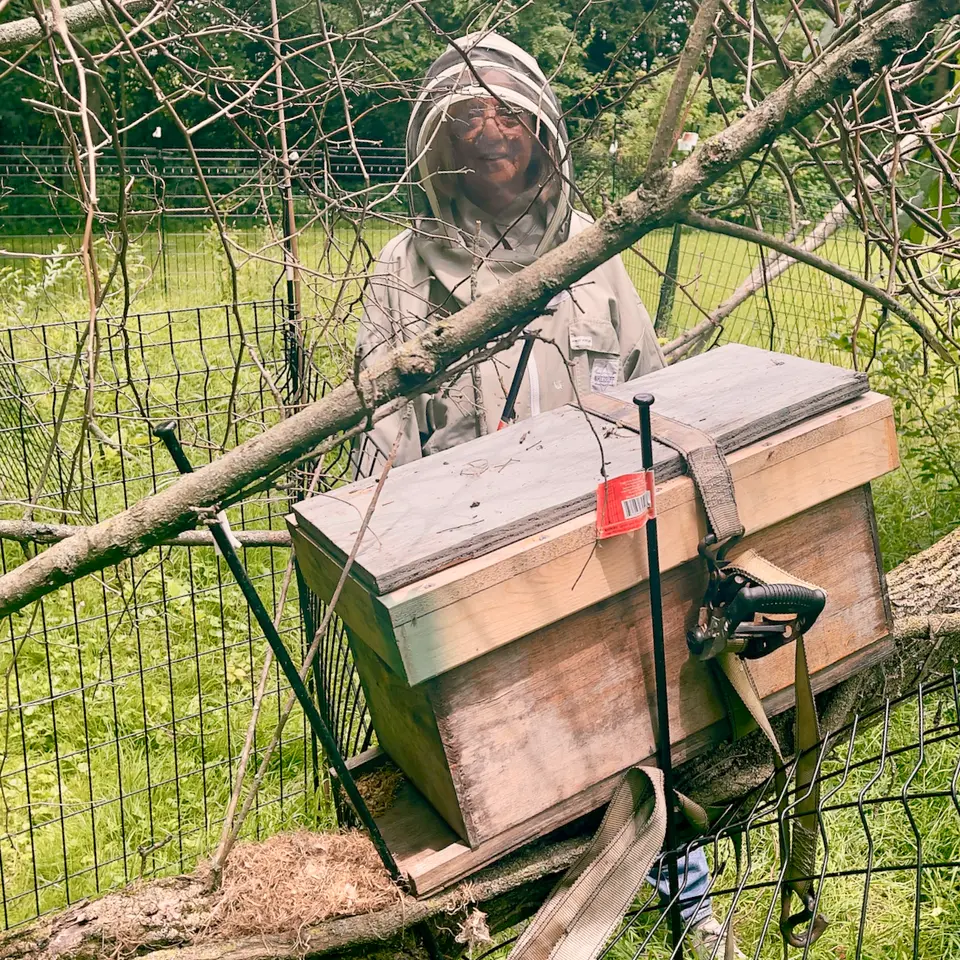 flight at the entrance, and the realities of midsummer dearth all point toward a colony that simply never gained enough strength.
Back at his own apiary, Jim examines two similarly small “after swarms” (often called secondary swarms) and reflects on why these tiny colonies form in the first place. He discusses virgin queens, delayed brood production, the challenges of building population late in the season, and why even experienced beekeepers still have unanswered questions about swarm biology.
Along the way, Jim shares a memorable story of a forgotten nucleus colony that unexpectedly survived an entire Ohio winter, reminding us that honey bees occasionally defy our expectations.
The episode concludes with reflections on knowing when not to disturb healthy colonies during summer dearth, accepting that natural losses are part of beekeeping, and embracing the continual learning that keeps even veteran beekeepers curious after decades in the bee yard.
______________________

Thanks to Betterbee for sponsoring today's episode. Betterbee’s mission is to support every beekeeper with excellent customer service, continued education and quality equipment. From their colorful and informative catalog to their support of beekeeper educational activities, including this podcast series, Betterbee truly is Beekeepers Serving Beekeepers. See for yourself at www.betterbee.com

We’d like to thank Vita Bee Health for supporting the podcast. Vita provides proven tools for controlling Varroa—from Apistan and Apiguard to the new VarroxSan extended-release oxalic acid strips—helping beekeepers keep stronger, healthier colonies.
______________________
Honey Bee Obscura is brought to you by Growing Planet Media, LLC, the home of Beekeeping Today Podcast.
Music: Heart & Soul by Gyom, All We Know by Midway Music; Christmas Avenue by Immersive Music; original guitar music by Jeffrey Ott
Cartoons by: John Martin (Beezwax Comics)
Copyright © 2026 by Growing Planet Media, LLC

Episode 295 – Tiny Hives Update with Sherry
Jim Tew
Hey listeners, this is Jim. For once I'm not in my bee yard right now. Well we'll be later today.
I'm here with Sherry Do you listeners remember that Sherry picked up a very small hive months ago? They came over and they Put it in a box for her. Say hi Sherry.
Sherry F.
Hi everyone.
Jim Tew
Well, I want to go back and look at that It's late July and by now you can get a pretty good feel if something is going to work out with bees or not. I've got some small colonies myself, so today it's gonna be my tiny colony. Listeners, I'm Jim Tew. I come to you here at Honey Bee Obscura about once a week where I try to talk about something to do with practical plain talk beekeeping.
Introduction
Welcome. to Honey Bee Obscura, brought to you by Growing Planet Media, the producers of the Beekeeping Today podcast. Join Jim Tew, your guide through the complexities, the beauty, the fun, And the challenges of managing honey bees.
Jim hosts fun and interesting guests who take a deep dive into the intricate world of honey bees. Whether you're a seasoned beekeeper or just getting started, get ready for some plain talk. that'll delve into all things honey bees.
Jim Tew
Sherry, has anybody opened them since you had them transferred?
Sherry F.
No, um when Dave put 'em in the nuc, uh they have not been opened, but I've walked down on occasion and tried to see if the worker bees were going in and out of the hive and or the nuc and um I do see some activity but not as much as I would like to have seen
Jim Tew
So you're a frustrated beekeeper.
Sherry F.
Yes, I am.
Jim Tew
Because you thought that if you put bees in this box, they would love you for it. Oh well you got it all protected.
Sherry F.
Yes.
Jim Tew
With a fence around it.
Sherry F.
Well that was my idea.
Jim Tew
I did not- Oh Sherry, this is not good.
Sherry F.
I did not oh
Jim Tew
Listeners, there's bees coming and going occasionally, but there's been a mouse in there.
Sherry F.
Is that what that is? Oh, I did not know that. It wasn't There there was only a little bit yesterday. There wasn't it wasn't like that yesterday. I was down here looking.
Jim Tew
Well it's either a mouse or some kind of ground squirrel. But Either way, I gotta tell you that doesn't bode well. But there are occasional bees flying.
So listeners, don't try this at home. But I don't have any protective gear. This is really a small hive And I guess I'm just really too presumptuous.
You want to put that on, Sherry, if you want to if I'm not gonna wear it, one of us must. That way if I have to run You can close the hive up. Okay.
It's ratchet strapped closed with the rusty ratchet strap. That didn't snap release. So how do I get this to release?
Sherry worked in my lab for years and the guy who did the work for her Worked in my lab and he has not got this thing threaded right. There's bushes and trees around And boy there's no it's not briars. I thought there were.
Just feels like there are.
Sherry F.
Well, it yes there are some in there, Jim.
Jim Tew
Okay.
Sherry F.
So you're not
Jim Tew
I'm being attacked by a bush and the ratchet strap is not releasing. Dave, you didn't thread it upright. And it is still really hooked They did a nice job and more there are thorns on this thing.
Sherry F.
Yeah, there are. It's fryer, so let me go to the other side I can pull it. Let me go around.
Jim Tew
Okay.
Sherry F.
This set.
Jim Tew
Listeners, this the this the Do you remember I told you that the nest had built in the open under a tree that had fallen. It's about two feet off the ground. And I couldn't believe that the skunks or something had not already gotten it And this guy, what is this thing, Sherry with all the thorns? Not multi-flora. Well you're gonna get as torn up as I am.
Sherry F.
Well I'm doing alright
Jim Tew
I think we're gonna stop here because the briars are eating me up and that screw right there he screwed the lid down There's one bee coming back. So I'm averaging about a bee a minute. There's a slight chance that that's a robber, but there's gonna be precious little bit in there. Well I don't know. Do you like mice?
Sherry F.
Not really.
Jim Tew
Well it looks like you're keeping mice instead of bees. Oh no.
Sherry F.
Well
Jim Tew
I'm gonna call this off and just say that this colony is dead. It just hasn't quite finished dying And I will come back over sometime when it's more casual and help you take this thing down and get Dave his equipment back
Sherry F.
So do you think that there is just minor just a minor amount of bees in there then?
Jim Tew
Yep.
Sherry F.
Do you think the queen is still in there then?
Jim Tew
I'm guessing the queen I don't know. Probably still in there, maybe not.
Sherry F.
Okay.
Jim Tew
I'll post a picture of what I'm looking at on the website. And that way you guys can see the thorns. Have a look at this on the web and see if you agree with me just aborting because can't tell what kind of rose that is.
Some kind of vine that's got really nice thorns on it. Listeners, I guess it's okay sometimes to abort. And I'm saying this isn't this isn't abort.
This is when I made that call because it's sitting on a tree trunk that's down and it's ratchet strapped to it. The ratchet strap's not threaded correctly and it's rusty and it's hard to use. There's extensive mouse damage out front, the litter in the nesting, and there's almost no bee flight So I don't know that you're going to have to have a lot of concern about getting extra feed and bringing over frames of honey from Dave or someone to supplement that But if you want to get bees, there's always next year.
That's true. And beekeeping, that's pretty much the principle. Well, there's always next year.
If I sound like I got one lung, listeners, it's because there's a fairly steep gradient back up to the house And I'm trying to talk to you while I'm walking with creaky cranky knees and thorns all over me, Sherry.
Sherry F.
Yeah, ouch.
Jim Tew
But you got a nice bee yard. You just need bees and not so many thorns. And I also cut back some on the mice
Sherry F.
Okay. We'll do.
Jim Tew
Yeah, right. You need to know Sherry is an avid bird watcher and gardener. And she's got a menagerie of cats and dogs. So she's always got something going on. Bees were just an addition that she tried because they were free.
Sherry F.
That's right.
Jim Tew
Alright, I'm back to the house Listeners, we'll call it a break here and we'll hear from my sponsor. And while we're doing that, I'll drive back home And then I'll show you my own run down, weak little colonies where I hive two mating swarms that I knew weren't going to make it, but Since I had those guys cutting my grass, I hived them. So stand by. I'll talk to you in a few minutes.
Betterbee
Looking to re-queen a hive, make a split, or build your own nucs this season? Better be Has mated queens available for shipment or pickup in Greenwich, New York. Choose from QTek K9 Queens, bred for hygienic mite resistance and strong honey production, gentle carniolan queens, known For managing hive populations with the flow, or Betterbee's locally raised northern queens, selected for winter hardiness, disease resistance, temperament, and honey production. Order your queens today at betterbee. com.
Vita Bee Health
We'd like to thank Vita Bee Health for supporting this podcast. Vita provides proven tools for controlling Varroa, Apistan, and Apiguard to the new Varroxsan. Extended release oxalic acid strips, helping beekeepers keep stronger, healthier colonies.
Jim Tew
Okay, listeners. That was kind of a debacle, wasn't it? A little bit of gossip here, I suppose, since Sherry's not here now.
She worked in the bee lab for decades. She ran the facility. Kept my books, arranged travel, helped set up meetings.
But you know what she didn't do She did not keep bees. She didn't like being stung. She said she had allergies and anytime somebody says that, I take them at their word.
I'm not a physician or an immunologist or whatever it would take. That beehive never had a chance. That cluster of that colony.
Really never had a chance But anything that makes me think, I'm in my barn, so there's a sound change. Anything that makes me think And what I think I've understood is that An afterswarm is a swarm that leaves after the primary swarm. There may be something called even a tertiary swarm.
Really, a mating swarm, according to the literature, is probably not a thing. There's a mating flight But there's really not a mating swarm. So I had figured out when I picked up these two softball size swarms That they probably had virgin queens.
The thing the literature didn't tell me is why colonies would cast a secondary swarm. If you have any guesses, I wouldn't mind hearing from you. Was there still too many bees in the colony?
Was it Virgin Queens? I don't understand it. I'll try to spend more time on that.
If any of you have read or have already explored this, it would help me and maybe the rest of us who don't have a clear understanding of why a colony would cast A secondary swarm. So I've got two of those here myself. I took a two-week trip to Montana to Glacier National Park.
And so my yard is just a jungle. But I got a I got a note, thank you, for the person who wrote me, saying that they let their yard go too. Well, here's some nice poison ivy in my yard and that it became a natural sanctuary ecosystem.
I thought about talking to you more, but I guess I'll just say this and then run. And that Glacier National Park thing, there was all this yellow sweet clover, white sweet clover along the road, and we're up in the Rockies and there's flowers here and flowers there. What was that?
Some kind of bear flower? I didn't see a single honey bee. Not a single honey bee.
I saw some you know, native pollinators. So when I got back to our home, our house I looked it up and Glacier was very specific. They don't encourage honey bees in the park because they're not part of the natural ecosystem.
They want everything to be the way it would be, running itself. So it was an odd trip for me. There were no bees in it.
I saw a few beehives back in the valleys And they were just gigantic canola fields. So I guess they're probably making canola honey, which I've been told granulates very quickly But that was a strange trip. Very, very rewarding, very vast, very natural, bare spray, the whole thing But for once there were no honey bees involved.
Now having said that here I am at my own little colony and you can always tell so much by entrance flight. And let me tell you on this one, there is none. So I can tell you what's in this before I even open it.
Probably wax moths. Nope. No wax moths, no bees, and the remnants of either a laying worker or An unmated queen that never mated.
Just a piece of burr comb hanging here with the remnants of drone brood that never emerged that never emerged. Doesn't take long to talk about that. Took me about 20 minutes to drive home from the other location.
And I lectured myself. Well, you didn't even open the hive. Well, it was killing me.
I was actually taking good-sized thorns out of me And I've already told you the ratchet strap wasn't working. But with that mouse damage out front, which It just wasn't going to work. So I reminded myself that I do call this plain talk beekeeping.
So here's some plain talk for you All bee swarms don't make it, even in the wild. And the literature I was reading about these swarms said that these small swarms that have unmated queens take about three to four weeks before they have any brood. They build out much later, much slower.
And their chances for winter survival are greatly reduced. Walking through this tall grass to the other one And this one is very active. Yep, this one is working.
It's in of one of those six-frame expanded polystyrene boxes. We heft it. What does hefting mean to you?
Yep, it's got some weight to it. And I'll crack it open. Yep, this this looks good for a small colony.
Capped brood. It's got some stored honey. It's got a little bit of weight to it.
Maybe this expanded poly style ring will help it get through the winter It's a long story and I don't have much time left, so I'll make it short, but years ago when the small hive beetles first got here We found them out in a pumpkin field in beehives out there. So I put a nuc out there just to monitor and see what would happen Would those bees come out, would those beetles come out and then go down into the ground and pupate and do all that thing they do And do you know that I forgot it? And the next spring we got a call from the farmer saying we had a beehive in the way out there and that they needed to get planting done.
Well, I thought he just wanted me to move the equipment. And that little four-frame nuc sat out in the middle of an open pumpkin field with three frames of bees. And survived the winter and it was it was a winner.
It was just a regular old-fashioned no-nonsense winner. I was I was shocked. So when I look at this one I'm not as hopeless as I used to be.
I cannot explain why that little beehive survived all those years ago. But I guess there I'm putting this back together now. I just wanted to have a quick look.
This one is is doing okay. If this were if this were me This colony would really build up nicely. But since it chose this difficult path of this after swarm, secondary swarm, Secondary swarms are frequently called after swarms, but secondary tends to be a better wording for these small swarms that come later.
This is not me lecturing you, this is me trying to educate myself and just talking to you while I'll do it. So maybe this thing has a chance. So out of the three tiny highs I looked at today, one is already dead and gone.
I gotta be now. Who doesn't like me here? And I don't mind it.
I got my veil, but I can't talk to you. I don't want to swallow a bee. So I have three of these tiny colonies.
One looks good, one's already dead, and one is dead. It just hasn't finished dying. Could it be said That here in Ohio, July is kind of the evaluation month.
The first colony is not going to make it. It's already it's already essentially dead. The mice have already moved in.
Second colony. This is all happening on this is July the 24th. There's a little bit of sweet clover left and other than that we're going to go into a dearth now to golden rod and fall flowers come So these colonies basically are going to have to make it on what they've got.
But there's just so much I don't know about beekeeping after all these years of tinkering with bees. Does the swarm size, the cluster size, if it's compatible with the cavity space and the brood stores And if it's in a sheltered place, are those characteristics for a potential successful wintering? You know, when we keep these in our boxes, we want them in two deeps.
Maybe some insulation and whatever, but nature's much more unf unforgiving and unselective and you know all nest cavity sites aren't the same, so to say again plain taught beekeeping All colonies don't survive in nature and it has probably always been that way. I don't know So these two swarms, these three swarms, two of them are mine, one of them wasn't. I already had these swarms. I didn't I didn't want to get any more bees I had all I wanted back here, about ten colonies, and I kept getting these little swarms, and they would hang outside my apiary fence And either bees from that swarm or bees from the yard stung one of the p professional guys who cuts my grass now.
Yes, yes it's true. My first job in life was mowing lawns. And now I pay somebody to cut mine because my daughters don't want me on a mower and a tractor here by myself with no one to monitor when I hurt myself.
So when these guys come in to do my yard work They're tough, but they don't like being stung up, so I I hive those swarms just to get them out of the way, not because I really wanted them As a younger beekeeper, I would have gone into strong colonies and I would have parasitized some of their brood and some of their honey stores and boosted these colonies and I'd take them from the wealthy to give to the poor But as an old guy thinking you can do all that and they still might die or you can go sit inside where it's cool. What do you think I chose to do? So out of the deal, maybe I get one Today I wanted to come out and have a look at the colonies that the passing season is passing judgment on.
And I've already told you what those results may be. The big ones that are just boiling strong here and bees just flooding coming and going. Those would be the ones that there'd be a price to be paid for opening them.
From this point on in July, there's going to be a price to be paid, and robbing's going to be an increasing issue I used to open them and just to see what was going on and to check the queen and do all that and now if they're boiling outside like they are now and coming back with pollen. I'm beyond the op the uh years of where I just would open them just to check. I was growing and developing then.
If you're doing that now and you've been keeping bees eight, nine, ten years I encourage you to do it. Learn, enjoy, adapt. Do what you can to keep your bees strong.
And on a final note, Sitting here across the yard watching a hive washboard on the front. That is the most tantalizing, unclear behavior that I've ever dealt with. And I just don't know what causes it.
I may go back and see if anyone else has determined something that could result in that washboarding behavior on the front of the colony Listeners, I'm gonna cut this off here now. It's a pretty good day. I need to do something back here with these weeds, at least to get the entrances opened up.
These weeds are going to turn into fall flowers. I've already seen bumble. bees on some of the fall flowers back here.
So it's too wild though. It's too wild. I won't bring any tourist back here and I won't make any pictures of it.
We told we can talk next week. I'm Jim telling you it wasn't a great day. It was an educational day.
I'll take it. I'll take it. Goodbye.