Memorable Stings with Anne Frey (294)

Every beekeeper has a sting story, but a few become unforgettable. In this episode of Honey Bee Obscura, Dr. Jim Tew and Anne Frey swap memorable stings—and sometimes humorous—stories about the bee stings they’ll never forget. From Jim’s infamous bee sting inside his nose while demonstrating bees to a young family, to Anne’s dramatically swollen face after venturing into the apiary without a veil, they share experiences that every beekeeper can appreciate.
Along the way they discuss why these incidents are the exception rather than the rule, how protective clothing affects sting severity, why loose-fitting bee suits are often more effective than heavy clothing, staying hydrated while working colonies in hot weather, and the importance of respecting—even after decades of experience—the defensive instincts of honey bees.
The conversation is lighthearted, practical, and full of the kind of storytelling that reminds us why beekeeping is equal parts science, skill, humility, and good humor.

 Apple Podcasts
 YouTube
 Spotify
 Amazon Music
 Overcast
 Castro
 RSS Feed
 Every beekeeper has memorable stings that stand out above all the rest.
This week on Honey Bee Obscura, Dr. Jim Tew and Anne Frey share some of their most memorable experiences with honey bee stings—stories that range from painful to humorous, but all serve as reminders that working with bees always deserves respect.
Jim recounts the unforgettable moment when a single bee flew directly into his nostril during an educational demonstration, producing one of the most painful stings of his career. Anne follows with stories of dramatic facial swelling after venturing into the apiary without a veil and discusses how even experienced beekeepers occasionally become a little too confident around their colonies.
Together they explain why these memorable incidents are unusual rather than typical, offering reassurance that most bee stings are minor annoyances for experienced beekeepers. They also discuss practical topics including choosing loose-fitting protective clothing, why baggy bee suits reduce the severity of stings, staying hydrated during summer inspections, and avoiding unnecessary risks in the apiary.
The episode also highlights how experience teaches humility. Even after decades of working bees, both Jim and Anne emphasize that honey bees deserve respect every time a hive is opened.
If you’ve ever had a sting you’ll never forget—or simply want to hear two experienced beekeepers share entertaining stories from years in the apiary—you’ll enjoy this week’s conversation.
______________________

Thanks to Betterbee for sponsoring today's episode. Betterbee’s mission is to support every beekeeper with excellent customer service, continued education and quality equipment. From their colorful and informative catalog to their support of beekeeper educational activities, including this podcast series, Betterbee truly is Beekeepers Serving Beekeepers. See for yourself at www.betterbee.com

We’d like to thank Vita Bee Health for supporting the podcast. Vita provides proven tools for controlling Varroa—from Apistan and Apiguard to the new VarroxSan extended-release oxalic acid strips—helping beekeepers keep stronger, healthier colonies.
______________________
Honey Bee Obscura is brought to you by Growing Planet Media, LLC, the home of Beekeeping Today Podcast.
Music: Heart & Soul by Gyom, All We Know by Midway Music; Christmas Avenue by Immersive Music; original guitar music by Jeffrey Ott
Cartoons by: John Martin (Beezwax Comics)
Copyright © 2026 by Growing Planet Media, LLC

Episode 294 – Memorable Stings with Anne Frey
Jim Tew
Jim Tew here. It's Thursday morning again and time just to chat about bees. Nothing serious, nothing heavy, so before I tell you the topic, don't get all worked up, but I thought we'd spend some time talking about memorable stings.
I got Anne Frey here with me. Anne, hello.
Anne Frey
Hi, Jim. Here again.
Jim Tew
Thanks for coming back again. And I was going to wonder if you and I can talk about stings that you just don't readily forget.
Oh, the stings that will stay in your mind forever, sure. Let's do it here in just a minute. Listeners, I'm Jim Tew and I come to you here once a week at Honey Bee Obscura where we try to talk about something that's plain and practical.
Introduction
Welcome to Honey Bee Obscura, brought to you by Growing Planet Media, the producers of the Beekeeping Today podcast. Join Jim Tew, your guide through the complexities, the beauty, the fun and the challenges of managing honey bees. Jim hosts fun and interesting guests who take a deep dive into the intricate world of honey bees. Whether you're a seasoned beekeeper or just getting started, get ready for some plain talk that'll delve into all things honey bees.
Jim Tew
And do you want me to do it or do you want to do it? I want to give a disclaimer — that we don't frighten people, that we don't make people think that the stings we're discussing in this segment are the ones that happen every time. They're the ones you don't forget.
Anne Frey
You know, that's a good disclaimer. It might get dramatic with the stories we're gonna tell you today, but they're the abnormal ones. The exciting ones, the weird ones. They're not the typical ones.
Jim Tew
Well, I'm going to do a short version first of a story that I must have told 300, 400 times, because it happened in 1977 or so, and I'm still talking about it today.
Anne Frey
Well, there's eight billion people in the world, so keep going.
Jim Tew
Somebody hasn't heard it. I'll bet you most of the listeners have heard the long version. I gave a quick demonstration to a young woman and her toddler child when they really pushed me to do it.
And I didn't light a smoker. And I gave my veil to the little girl. And my veil — I could tie it around her ankle. She was so small. And then I made that mother back up a little bit. And I had a little three-frame, four-frame nuc right outside the apiary door at the University of Maryland, and with no smoke.
As quickly as I could, and I'm telling this story as quickly as I can, I popped the lid off. I didn't breathe on the bees. I moved slowly. I didn't crack the propolis. Everything was calm. This was just going to be a gentle hive. Everything was fine. And as I sorted through them and showed the little girl — these are boy bees, these are girl bees — and I even spotted the queen. Well, while I was going through this show and tell, one lone bee out of that completely docile colony, without any warning, immediately flew up my right nostril and stung me up in my nose. And I can't tell you what that does to your knees.
Somehow a sting in your nose disengages your knees, or it did mine. I dropped on my knees and I was looking the little girl right in the face. She had eyes as big as white tennis balls. And with her watching me, I reached up into my nose and pulled out the biggest thing she'd ever seen anybody pull out of their nose.
And there's a second part to this. The mother was standing off to one side saying, Are you okay? Are you okay? Is my daughter okay? And I wanted to say, no, I'm not okay. I'm about to die here.
It was just one bee, one sting, all the other bees were fine. What did that bee, with its little supraesophageal ganglion, make that personal decision to come get me.
And I finished that story by saying that that little girl would be over forty to forty-two years old today, and the mother's about my age. I'm close to seventy-eight. And Anne, I'm comfortable saying that wherever those two women are, they're not beekeepers.
Anne Frey
Oh, okay. I thought you were gonna turn that into the toddler became a beekeeper and is now a scientist. Okay.
Jim Tew
I liked your version a lot better.
Anne Frey
Well, at least you didn't fall down and have a heart attack and die in front of the child or something like that. It would have been a bad influence. You know, you held it together.
In the nose, though, so sensitive. I've never had that happen. That's a terrible story.
Jim Tew
It is a terrible story.
Anne Frey
Maybe it was like — there's a dark hole, it's a hive and I want to go in it. Why did it do that?
Jim Tew
I don't know why she did it. I was completely caught off guard. I wasn't going to talk that much about this, but I was a young guy. I was in graduate school. I was going to earn a PhD. There was just nothing I didn't know. I was so confident.
Anne Frey
Oh, confident.
Jim Tew
And I made a basic mistake that day. This is where I want to use our disclaimer — this is not a typical sting. This happened one time in 1977.
Anne Frey
The idea of when you said I was a young man — it instantly made me remember a phrase that I say to people that I've been tutoring or mentoring, and apparently I say it so much that they got some shirts made this year and they gave me one and they all wore them. And it says don't get cocky. So apparently that's my motto. Anyways, Chris Cripps, who is one of the owners of Betterbee, he made a presentation one time and he asked me if he could use this photo I had of myself — the whole right side of my face swollen up, my eyes completely closed shut, the eyelids were swollen shut. And he was like, can I use this in a presentation? It's gonna be at a kind of funny point of the presentation. And I said, sure, use it, you know. And he said, what's the story on this? I said, well, I got cocky.
You know, it was the first in-hive inspection of the spring and everything was very happy-go-lucky, and I went out into the bee yard with no veil because I wasn't really gonna do any bee work. I just wanted to go and look at entrances or something. And so I just got stung twice on the forehead for no apparent reason. These bees just came out and zapped me on the forehead and, you know, the venom and the swelling went downwards. So that whole right side of my face was swollen and I guess he uses it — he's like, this is our head beekeeper and sometimes things happen — was his point.
But yeah, it's just like it didn't hurt terribly much, but I'll never forget that one because I was definitely just too cocky, you know. Like, I don't need a veil. I'm not doing anything, but yes, I'm among the hives. I'm in the midst of them. So not super painful like yours, but some dramatic swelling, 'cause I guess those on the face, you know, there's maybe not a lot of muscle and flesh to swell up, so it's right against the bone and it looks really dramatic when it swells. But uh, you ever get stung on the hand and your whole hand swells up like a big baby hand? Like there's dimples, no more knuckles, just dimples.
Jim Tew
I used to have that happen every most springs, you know, you'd excessively swell, but by the middle of the summer when I take a lot more stings, I got better.
Anne Frey
This springtime, I don't have any more resistance to venom in my blood — kind of reaction. That's what the one over my eyebrow was. But yeah, when a child or a new beekeeper gets a sting like that, it's just so shocking to them and it's just like, remember guys, it's gonna go away soon. The pain is gonna hurt a lot at first, but then it's gonna go away.
I was telling Hannah, a daughter of an employee here who was doing a little bee investigation with us, she got stung and it was her first sting in her life and I just was like, it's gonna be okay. It's gonna be like thirty more seconds, it's gonna be fine, twenty more seconds, and we just — she just kept looking at me as I counted down like that and then I said, is it pretty much okay now? And she was just like, yeah, you know, because that's how long it lasts.
And then, you know, the next day it itches pretty bad. But it's a shock when you get stung. It's insulting sometimes, especially when you weren't doing anything even in the hive. And you didn't deserve it.
Jim Tew
You just went up with a cup of coffee.
Anne Frey
Right, right. But sometimes that happens. We also tell kids, you know, it's not gonna bother you if you don't bother it, and that's not really true all the time, is it, Jim?
Jim Tew
Don't bother them, they won't bother you. That is not true. They will light you up sometimes.
Anne Frey
Right. You know, you might be in their flight path or something, you know, we're five feet, six feet tall and they're coming in for a landing and they hit you and you're like, whoa, and then you touch it and they sting you 'cause you squeezed 'em or whatever. But yeah, learn not to flinch, learn not to flail.
Those dramatic stings. We got some multiple stings that ended up being dramatic. One time we moved bees at night here at Betterbee, and that's why I'll never move bees at night again. But I swear each one of us probably had about twenty-five to thirty stings and cumulatively, that was horrible. Yeah. It was, and one person in the end, they just like sat down and then laid down on the ground. And I was really worried about them.
Jim Tew
Oh, I would be too.
Anne Frey
Yeah, I think it was — they felt nauseous. I think it was just from the sheer amount of venom, but she might have gotten more than thirty stings. But they were all through the clothing. It wasn't like a full-on, skin-to-stinger, full-venom-sack kind of sting. You know what I mean — when it's through the clothing it's a little different.
Jim Tew
I was just waiting for you to finish your comment. That's perfect. A sting through the clothing to me is not always as bad as a sting where you get the full load, because the clothing, I think, must absorb some of the bee venom before it gets to you.
Anne Frey
Or maybe because you feel it, you shift and then the clothing pulls the bee away from yourself.
Jim Tew
You didn't get the full dose.
Anne Frey
I'm a real advocate for baggy clothing. It doesn't have to be thick, it doesn't have to be a layer of jeans and a layer of bee pants. You know, it's just that anything that's baggy and keeps the sting away from your skin is my idea of good bee clothing. Because I get hot. I just want like lightweight cotton, thin pants, but they're super baggy. We have no style. Beekeepers have no style.
Jim Tew
We have no style.
Anne Frey
No, everything is baggy, we look like a bunch of —
Jim Tew
Everything is baggy and dirty. Sloppy.
Anne Frey
Yeah.
Jim Tew
We were not a pretty bunch. And while we let our listeners accept the fact that we just described ourselves as not being trendsetters, let's hear from our sponsor.
Betterbee
Looking to re-queen a hive, make a split, or build your own nucs this season? Betterbee has mated queens available for shipment or pickup in Greenwich, New York. Choose from VSH Italian queens, bred for hygienic mite resistance and strong honey production, gentle Carniolan queens, known for managing hive populations with the flow, or Betterbee's locally raised Northern Queens, selected for winter hardiness, disease resistance, temperament, and honey production. Order your queens today at betterbee.com.
Jim Tew
I want to come back and get back into the swing of things with the comment that you made — that wet clothes, or I made it in some of the other segments, wet clothes are bad clothes. One where they're cooler, but when they stick to you tightly the bees can sting through it, and then you get some of the sting, part of the sting, and over a while, even if you get a small sting, it's itchy and kind of red and welty and whatever.
Anne Frey
If it's baggy and then you get wet, or you feel like I should cool myself down by pouring my water bottle over my head and neck, then your shoulders are tight. The clothing is tight to your shoulders and then that's a spot where you'll easily feel a sting. But the sweat, our attempts at keeping ourselves cool with water, it's all kind of against the idea of having the baggy clothes. But can't stop the sweating. You gotta embrace the sweating.
Jim Tew
You got to embrace the sweating. Baggy is better. Embrace the sweating. Otherwise you really are going to die.
Anne Frey
Oh man, we drink so much water. Gotta tell ya, just keep drinking the water folks.
Jim Tew
One of the best things that happen, Anne, is some of those veils that you can open up, because in the old days you had to get completely away from the bees and take the veil completely off, get a drink of water and then suit back up again, and those zip-open veils are much nicer.
Anne Frey
Oh yeah, the zip-open connection. I like that. Yeah, I used to use the kind that ties with a string when I first started, but then I also developed this technique of just putting a water bottle right up to my veil and drinking through the veil, you know. I'm not even gonna open the zipper and pause too.
Jim Tew
Well, that's kinda tasty.
Anne Frey
Uh, well, it's filtered through the veil.
Jim Tew
It is filtered.
Anne Frey
It's not good to do if you drink a Gatorade or a Coca-Cola though.
Jim Tew
And I got a sting story for you. And I didn't think about it until it was way too late. I went through a period of time where a Cleveland television station took a shine to my bee program.
And on three or four occasions they asked me to go up to Cleveland and do something with bees on their television show. Well, I felt like I was just a budding star here and I had nothing but fame and glory in my future. So, kind of getting short on topics one day, I said, how about if I just take a sting and to reassure people that it's not the end of the world? Well, they were all over that — great job, great job, that's going to really be an attention getter.
Time passed and it got to be close to time to go, and a professional friend of mine said, Jim, tell me what you're going to do, what your plan is if you take that sting on live television and have anything but a good reaction. He said, it would be horrible to the end of your days if you take a sting on live television and die.
Well, that guy didn't just set my teeth on edge. He set all my teeth on edge. I thought, I gotta change this. And I went up there with all the cabling and the big cameras and the studios and the fake stuff that looks really nice, and all it is — it's just something weird on a TV set.
And I told the director, I'm starting to rethink this. It may not be a good idea to sting me. And she says, oh, are you sure? We've been talking it up and everybody's looking forward to it. I said, well, there's just a slight risk I shouldn't take.
And as I was saying that, I was hearing the announcer going live, saying that in just a few minutes Dr. Jim Tew is going to take a live sting right here before our very eyes. So I thought, I've got to do it. This may be the dumbest thing I've ever done.
They zoomed in tight with their multi-million dollar cameras and they could almost see my skin pores, and I stung myself right between my thumb and finger. And that thing pulsated beautifully on live television. And I told them what I was feeling. And the whole time I was thinking, God, please, not here, not now. Please, heavenly being, not here, not now.
Anne Frey
They don't have five or ten minutes to use, which is how long it would take for you to show an allergic reaction, I guess.
Jim Tew
Went along swimmingly, I didn't die, and I'm never doing that again.
Anne Frey
Who was the friend who warned you to think about it? Or maybe they said, don't get cocky, Jim.
Jim Tew
Yep, don't get cocky, Jim. In this case, it should have been don't be stupid, Jim. I think he was well beyond cocky. Should I call his name? He was an OSU professional.
Anne Frey
I was wondering, like, was it a doctor or why did he think straight into that worst case scenario instantly?
Jim Tew
He was the extension specialist. I won't use his name. He was the extension specialist at Ohio State. And at the time I was teaching a commercial beekeeping program and we worked together closely. And he's the one who spoke up so openly.
Anne Frey
So openly. He cared about you. And the reputation of every beekeeper.
Jim Tew
And the reputation of our industry.
Anne Frey
Seems like a kind of a circus sideshow thing they had you doing there.
Jim Tew
Yep. And I won't even go into it because it's nothing to do with stings, but they asked us to put on a bee beard because we went through a period of time where bee beards were just the greatest thing going. And what an ordeal that was to set up a cage on their studio and make up a bee beard and they kept breaking away, coming back to it. And it was a good show, but this is the part I wasn't expecting.
They came in and said, great job, great job. We've got Miss — I forget what it was — Miss Hershey Bar or somebody coming up next. So let's get this thing off the set.
And I said, oh my stars, we've got to vacuum, we've got to do all kinds of things. And he said, no, no, you've got three minutes to get this thing out of here. And it was a huge cage and bees and everything. They opened the door and I and my crew moved that cage outside. This is going to be offensive, and we had no time to vacuum. And then out in the parking lot, I turned that cage upside down and released several thousand bees. It was a small beard, and just loaded the truck up and got out of Dodge.
Anne Frey
I hope Jeff is gonna edit this out.
Jim Tew
We started with the disclaimer, Anne, that this is not routine.
Anne Frey
Yeah, I think routine is you try not to crush or hurt bees as much as possible, but maybe you accept that a few are gonna be hurt during any inspection, just a few — like maybe six or something. And strive not to do that and you won't get stung, they won't get upset if you're skillful, but sometimes they get ya, you know.
Jim Tew
Yep. You're describing a perfect world. A perfect world.
For yours and theirs, well, we're out of time. I'm sure you had more stinging events. I have more stinging events, but I'm going to say this and I want you to back me up. Most stings are nothing. If you're an established beekeeper, no health issues, no sting sensitivity, most stings are annoying and the heat and the clothes and the heavy equipment becomes as much of an issue.
Anne Frey
They itch the next day. I never have gotten over that, but yeah, I agree with everything else, yep.
Jim Tew
Don't take this wrong. I was just trying to come up with an appreciation for those things that give you a memory in life. I've only got about five or six more stories. But we're not going into it because we're done here. So I want you to know that out of all the stings that I've taken, and I'm not a hero, don't take any stings you don't have to. I would never take a sting I don't have to. Except on the news. Except on live TV one time. What do you wanna say, Anne, otherwise I'm done here.
Anne Frey
I think it's good that you have more stories, Jim, and that people should come back again to hear those other stories.
Jim Tew
Okay, maybe some other time when we want to scare people.
Anne Frey
We haven't run out of stories. Okay.
Jim Tew
And say bye.
Anne Frey
Okay, see you later folks.
Jim Tew
See you later folks. And thank you so much for your time here.
Anne Frey
You're welcome. Betterbee lets me do this. You know, it's good to do different things than just lone beekeeping sometimes. Alright, bye bye people.
Beekeeper and Educator
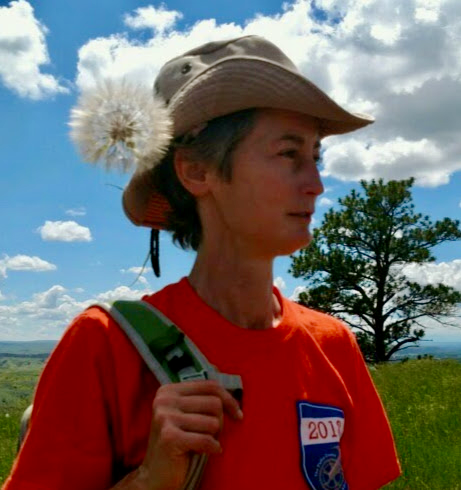
Anne lives in Greenwich, NY and since 2019 has been Betterbee's Head Beekeeper, teacher, and videographer (catch her on Betterbee's YouTube channel!). She first got bees in 1989 while getting a Biology degree, and like most of us, she was a "bee-haver" for just a few years, until she became a member of her local beekeeping club (the Southern Adirondack Beekeepers Association, or SABA), where she learned a lot from members and through club activities.
Anne became invaluable to SABA's operation and led the Annual Seminar and Bee School for many years. Beekeeping associations are so valuable to us because of the speakers and events, but also because of the casual networking, support, and mentoring that comes about when people find a group near them.
She became an EAS Master Beekeeper in 2002 and is still learning to this day. In her limited spare time, she reads sci-fi and rides her bicycle.