Plain Talk: Five Nice Hives (286)

Jim Tew returns to the bee yard to inspect five package colonies installed earlier in the spring. The colonies are thriving and rapidly filling their equipment, prompting a discussion about colony growth, swarm prevention, and the need for additional space. Jim also experiments with an oscillating multi-tool as a possible solution for heavily propolized frames, sharing his real-time observations on whether the idea has practical value. Along the way, he reflects on hive management, plastic versus wooden frames, and the challenge of maintaining colonies in a single deep brood chamber.

 Apple Podcasts
 YouTube
 Spotify
 Amazon Music
 Overcast
 Castro
 RSS Feed
 In this episode of Honey Bee Obscura, Jim Tew heads into the bee yard to check on five package colonies installed earlier in the spring. What begins as a routine inspection quickly becomes a reminder of how rapidly healthy colonies can develop during a favorable season. Each colony is thriving, filling its equipment and signaling that additional space will soon be needed to prevent overcrowding and potential swarming.
Jim also revisits a topic familiar to many beekeepers: heavily propolized colonies. After several challenging years that limited regular hive inspections, he discusses the realities of managing frames that have become firmly glued in place. This leads to a field test of an oscillating multi-tool as a possible aid for cutting through propolis and freeing stuck frames. Working directly in the apiary, Jim evaluates whether the tool offers practical value or is simply another interesting beekeeping experiment.
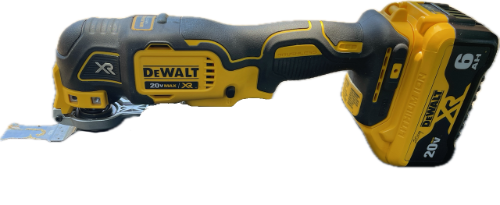 Jim also revisits a topic familiar to many beekeepers: heavily propolized colonies. After several challenging years that limited regular hive inspections, he discusses the realities of managing frames that have become firmly glued in place. This leads to a field test of an oscillating multi-tool as a possible aid for cutting through propolis and freeing stuck frames. Working directly in the apiary, Jim evaluates whether the tool offers practical value or is simply another interesting beekeeping experiment.
Along the way, he shares observations about package colony growth, the effects of warm weather on propolis consistency, the challenges of working with plastic frames in heavily propolized colonies, and his continuing curiosity about beekeepers who successfully manage colonies in a single deep brood chamber.
As always, Jim combines practical observations, honest field notes, and thoughtful questions from a lifetime of beekeeping experience.
______________________

Thanks to Betterbee for sponsoring today's episode. Betterbee’s mission is to support every beekeeper with excellent customer service, continued education and quality equipment. From their colorful and informative catalog to their support of beekeeper educational activities, including this podcast series, Betterbee truly is Beekeepers Serving Beekeepers. See for yourself at www.betterbee.com

We’d like to thank Vita Bee Health for supporting the podcast. Vita provides proven tools for controlling Varroa—from Apistan and Apiguard to the new VarroxSan extended-release oxalic acid strips—helping beekeepers keep stronger, healthier colonies.
______________________
Honey Bee Obscura is brought to you by Growing Planet Media, LLC, the home of Beekeeping Today Podcast.
Music: Heart & Soul by Gyom, All We Know by Midway Music; Christmas Avenue by Immersive Music; original guitar music by Jeffrey Ott
Cartoons by: John Martin (Beezwax Comics)
Copyright © 2026 by Growing Planet Media, LLC


Episode 286 – Plain Talk: Five Nice Hives
Jim Tew
Beekeepers, I saved you the trouble of putting you through the smoker loading routine.
I'm back in my yard Of course the grass is just relentless.
Bees are kind of calm.
But one of the things I kind of wanted to do today was just to have a reassuring look at the five packages that I paid for last spring, just a few weeks ago.
I put them in very quickly I didn't go through a lot of heartache and in fact it's the first time in years I didn't even photograph the whole process.
It's just another spring with more packages going in.
So I thought we'd have a look at that, talk about packages, and then if you'll hang on, I'm going to finish an idea that I started with you weeks ago, and I've decided to do it.
With you right here.
So if it doesn't work, it doesn't work.
Listeners, I'm Jim Tew, and I come to you once a week here at Honey Bee Obscura, where I just always try to talk about something you do with plain talk beekeeping.
Introduction
Welcome. Welcome to Honey Bee Obscura, brought to you by Growing Planet Media, the producers of the Beekeeping Today podcast. Join Jim Tew, your guide through the complexities, the beauty, the fun. And the challenges of managing honey bees. Jim hosts fun and interesting guests who take a deep dive into the intricate world of honey bees. Whether you're a seasoned beekeeper or just getting started, get ready for some plans. Plain talk that'll delve into all things honey bees.
Jim Tew
Right off the bat, good news, listeners.
I don't have any plans on discussing any swarms today at any kind of depth that may come up.
But I hope the swarm lecture series is over.
That was truly an event To live through all those storms and the crazy ones and every well here I am talking about it.
Just like I said I wasn't going to do it But one day I was trying to tell you that these colonies, because of the dark years I just went through in my family's health life, that a lot of these colonies have not been regularly worked And it's kind of important to know that yes, bee space is a real thing, and yes, frames are immovable, but no, they're not If you don't remove them fairly regularly and keep the propolis scraped out.
When I say that, that weighs on me.
Is that something I'll look back on? sometime or a year from now and say, well that was wrong.
I was telling beekeepers to get rid of propolis and that was a fundamental aspect of bee colony bee health or whatever.
So these colonies have not been opened enough.
In years.
So they're heavily propylized.
And I've done articles and whatever because I've become an authority at this.
A hive tool, just a common pocket hive tool, is frequently useless in heavily propolized hives.
In fact, I've got a small hammer that's only got about a six-inch handle, so it's easy to pack and carry.
And I would frequently set the colony up on its end and then lightly tap on the bottom end bars and drive them out from the bottom or at least get them broken loose. enough to pull them out.
Usually doing number two frame on either side just to not roll the queen up and all that burr comb that's always there So that's one way.
The other thing is just really get some meaningful hive tools.
I mean a wrecking bar, a crow bar.
But it's got to be something much heavier than just a common hive tool.
You're going to overspring it and snap it or whatever.
I don't know.
I've never done that, but I think it would happen.
Now, as I was telling you about this cockamamie idea I've got and this concept of slip shot beekeeping that I've been doing I wanted to know if an oscillating multi-tool could be used to cut through that propolis and then help me use a common hive tool enough to get it out.
And just as I was beginning to explain that to you, a swarm began to issue.
And what do you think I did?
I got all excited.
Gotta get a hive to and really did a poor job of explaining this idea that I was tinkering with And then today when I was coming back I thought well do you want to go back out there with something you've never tried one time with everybody looking over your shoulder And I decided I was gonna do it if it doesn't work it's no harm done I gotta I got a decent woodworking shop and I own these things for other reasons.
I've got another tool that's got a lot more blade options, but it's it requires electrical power from the From the grid and the one I've got out here has fewer tool options, but it runs off batteries.
Two objects today, listeners.
One is let's just look at these packages, see where they are, see where I am with them. criticize the grass that's growing and then secondly see if this tool can be used to help me churn through Some of this thick propolis.
Okay, step number one, phase number one.
I can stand outside this package hive And tell you that it's okay.
It's got good flight, they're bringing in pollen.
It's been out now what about uh eight, nine, ten weeks So there's nothing wrong with this colony.
And if really all I would want to do is open it.
Gotta move the perpetual hive top rock.
Is open it.
Yep, this is gonna be They're up in the panhole of the inner cover.
I didn't feed them much.
So whatever they've got they made on their own Yep, it is one full box.
It is completely full.
It needs space.
Or I'm going to have swarms coming out of this package colony They've got a little open area in the center where there's not a lot a great number of bees.
And that means there's a brood nest area there.
They've got it centered They look good.
You know what I hadn't thought of listeners?
This is huge.
When I was working this this spring, this propolis was cold And now, this propolis and this hot sun is just turned to gum.
So it's not going to be the same concept at all.
So I wonder if that means if this is even an idea that it needs to be done when the propolis is harner.
I'm not pulling a frame out of that one That colony is beautiful.
I'm just not going to explore something that doesn't need exploring.
Look at some of the others over here This is the one that I installed and it had a crack in the empty deep that I used up top to install them And they all begin to use that crack at the back of the hive as their primary entrance.
So let's see what's happening here.
A fairly nice day and there's still a bit of a nectar flow on.
This is another full one.
It's not as full as the other one over there Okay, I'm gonna try that gadget.
Even though I've told you that it's going to be more seasonal than I expected.
This this colony has a a frame locator for a queen cage.
It's got a thick top bar with a slot cut in the top. so that you can lay a queen in it.
Listeners, by the minute, I'm locking this idea about this oscillating tool less and less.
This is not one of the colonies with a lot of it in.
Alright, here goes nothing.
And it cut right through that Now I'm gonna run it down between the end bars.
And it seems to be doing okay with that My device is coming loose.
So run it down between the other on the other end. on the other other in bar frame.
You know it's gumming up the blade, but the blade doesn't seem to care And now when I come back to it, since the propolis is already soft, the frame is coming out fairly easily.
Hope the queen's not on this It's got she's got a beautiful pattern.
This is oh it's beautiful on both sides.
It's beautiful And the opposing frame inside is full.
These are nice bees.
They deserve a better beekeeper than I am.
Nice bees.
I don't I don't want to see the queen.
I don't want to do anything more.
I don't want to run the risk of damaging her.
This is the second one that could use more equipment Listeners, is there any of you who somehow keeps bees in a single deep?
Apparently That was the idea in the old days of one hive body and then supers on top of it But every time I do this have have we pumped up our coins so potent that they can fill up more than one deep So are our queens that good?
I don't know.
I really don't know.
But If some of you still keep bees in one deep, I'd like to know how you do it.
How do you restrain swarming? control things like that.
Here's the third one.
Tops really stuck down Don't have an undercover on it or what?
Yep, no undercover and it's chock a block full of bees.
Chaka block full of bees.
Here's the dirty secret.
I got some whiting going on here So there's a bit of a nectar flow still going on.
All the peripheral edges of all the exposed comb has a light layer of white on it A bit ago when I was giving you that lecture about using heavy-duty tools to get frames out I need to tell you that it's been my experience that it doesn't work well to do that with plastic frames.
If you try to pry plastic frames that hard It just doesn't work right.
This snaps over, breaks over.
I'm gonna put a queen excluder on top just to use as an inner cover since I don't readily have one.
Those frames of plastic don't pry out well So if you got plastic frames mostly and I do have a lot of plastic frames I have to preferentially go look for one of the ones that has a wood frame and work on that.
So three of these are beautiful.
And they did it.
I can't take any credit for it.
Oh, you know, before we start this one, why don't we take a break here from our sponsor
Betterbee
Looking to re-queen a hive, make a split, or build your own nucs this season? Better Bee has mated queens available for shipment or pickup in Greenwich, New York. Choose from Kutik. K-9 queens, bred for hygienic mite resistance and strong honey production, gentle carniolan queens, known for managing hide populations with the flow, or better bees locally raised northern queens. Selected for winter hardiness, disease resistance, temperament, and honey production. Order your queens today at betterbee. com.
Jim Tew
Okay, I'm back There's grass in the entrance.
This one doesn't have as much entrance activity as the others did As soon as this is over, beekeepers, I'm gonna have to go straight in and take some kind of antihistamine.
The grass is tall I've been reading about ticks.
I've never gotten the tick back here, but this looks like tick conditions to me.
But when I got the grass out, give the bees better entrance, they're moving in. more judiciously.
Alright, let's open it up.
See what happens here.
This one has one of the insulated hive covers on it This is the first time I've used them, so can't give you a report.
These have accepted it.
Yep, this is full as the others Absolutely as full as the others.
Let's do that thing I'm doing to see if this works.
So I gotta go pick it up.
If I really wanted to do this, I'm gonna pick out the second frame in.
We'll smoke them back away from it.
I'm just going to lightly touch it.
And it immediately cuts through and then I scrape it off.
Then I turn the device straight up and run it between the frame And then between the wall, it cuts through it, other end of the frame.
Cut through the old propolis.
It's a lot here.
Well, I don't know what to say about this.
It's working A little bit better than I thought it would.
There's a screw coming off.
Of course it's got to come off right now.
Let me see if I can take it out and put it away Okay, I got that off.
Now I'm gonna try to do the vertical cut.
And it goes right through.
I'm laying the gadget down.
I'll put a picture of it on the webpage I don't know.
This is this a thing?
I don't know.
I'm I'm always playing.
I'm always tinkering.
I mean it's just beekeeping.
We always do this.
We used a We began to use leaf blowers to such an extent for removes that nobody actually manufactured a dedicated bee blower anymore.
And I used them a lot.
They got brood on the out on this on the number two and number eight frames and nectar is dripping out of the frame They have brood maybe on the wall next right up front.
So there's that.
That looks nice putting the insulated top back on Would you think it's a problem to have it on in the summer?
I don't know.
So I'm just gonna put that back on for here Put the brick back on.
I'm kind of crying crocodile tears here I think I'm done with this cutter gadget.
It works okay.
It might be helpful if I had really a lot of these to do.
But I'm not sure I'm gonna put it in my Hive tool carrier.
I'm over here in ridiculous grass.
I'm gonna die of all this pollen.
I've got good flight at this one.
Got on another insulated top here And it's the same, it's full.
Drones, I can see brood.
Listeners, if you're a new beekeeper, Do your thing.
Open them up and do your thing And if you're an experienced beekeeper, I can tell you right now, if you're in my boots, you need to go back to your shop.
Put together five deeps and do things that are not really beekeeping.
So I said I wasn't going to mention swarms all that much.
And now I have to say this that if I think these packages would produce really late season swarms If I don't come do something with them to give them more room.
I'm gonna put an inner cover on here under this insulated outer cover.
Tops back on.
Oh, it's hot in the suit.
And I'm an old man and I got my hive tool, I got my smoker.
I want to go back and sit down somewhere nice and cool I improvise a paper plug, let the smoker go out, put that right there and I'll come back out in an hour or so and put it all away I don't have a convenient chair out here.
Stand in the shade.
Oh, that's work.
Alright, quick review.
Five packages.
They look so good.
I gotta go build equipment and get that on.
Probably won't paint it, just a hurry That 'd be a fundamental part of slip shot beekeeping.
I tried the oscillating multi-tool gadget.
It worked okay.
It worked better than okay, but it needs to be probably used when the propolis is cold and will shatter. instead of when it's gummy, even though it did cut through the gum reasonably well.
The bees didn't go bonkers about me using it.
So that's a real 60%.
If anybody wants to give it a try And lastly, I ask if any of you are keeping bees in single deeps to give me some idea of how you're doing that.
How do you suppress swarming?
Alright, I'm going to go clean up, drink some water, and uh Maybe read a bee book or something.
I don't know how it's going on this afternoon.
Beautiful day.
Beautiful day. 80 degrees.
So I'll end on that note.
I always enjoy talking to you.
Thanks for keeping me company out here.
I'm Jim. Telling you bye