Installing Packaged Bees with Anne Frey, Part 1 (279)

Package bee installation tips with Anne Frey and Jim Tew, covering setup methods, feeding mistakes, and queen release strategies for early spring success.

 Apple Podcasts
 YouTube
 Spotify
 Amazon Music
 Overcast
 Castro
 RSS Feed
 Package bee installation is one of the most common ways new beekeepers start a colony, and in this episode of Honey Bee Obscura, Jim Tew is joined by Anne Frey of Betterbee to share practical, experience-based approaches to getting packages established successfully.
As spring arrives, Jim opens with a familiar situation—ordering packages after winter losses, only to find more colonies survived than expected. That leads into a broader discussion of why packages remain a popular entry point for beginners, offering a slower and more manageable buildup compared to nucs or splits.
The conversation explores different installation techniques, including Jim’s “slow release” method, where bees exit the package on their own rather than being shaken into the hive. Anne adds perspective from working with customers and emphasizes how critical proper feeding is during early spring, when cold conditions can quickly lead to starvation even when food is present.
They also discuss queen cage management, including how long to wait before release and how to safely introduce the queen without risking loss. Along the way, they share real-world stories that highlight how small setup mistakes—especially around feeding and placement—can have significant consequences.
Throughout the episode, Jim and Anne reinforce a key message: successful package bee installation depends on attention to detail, timing, and understanding bee behavior. This is part one of a two-part conversation, setting up a deeper dive into package management in the next episode.
______________________

Thanks to Betterbee for sponsoring today's episode. Betterbee’s mission is to support every beekeeper with excellent customer service, continued education and quality equipment. From their colorful and informative catalog to their support of beekeeper educational activities, including this podcast series, Betterbee truly is Beekeepers Serving Beekeepers. See for yourself at www.betterbee.com

We’d like to thank Vita Bee Health for supporting the podcast. Vita provides proven tools for controlling Varroa—from Apistan and Apiguard to the new VarroxSan extended-release oxalic acid strips—helping beekeepers keep stronger, healthier colonies.
______________________
Honey Bee Obscura is brought to you by Growing Planet Media, LLC, the home of Beekeeping Today Podcast.
Music: Heart & Soul by Gyom, All We Know by Midway Music; Christmas Avenue by Immersive Music; original guitar music by Jeffrey Ott
Cartoons by: John Martin (Beezwax Comics)
Copyright © 2026 by Growing Planet Media, LLC


Episode 279 – Installing Packaged Bees with Anne Frey, Part 1
Jim Tew:
Hey, Honey Bee Obscura, podcast listeners. It's that time of the week. Jim Tew here. Anne's with me. Say hi, Anne.
Anne Frey:
Hi, Jim. Good to be here.
Jim Tew:
Yep, I always enjoy talking to you. It's better to have somebody to talk to than just talking to myself, which I'm always a good listener. I'm here for you I know that through the years, listeners, we've Kim and I and I by myself and possibly Ann have talked about packages, but you know, it's just package time of the year and I'm in the mood. Spring's breaking, we've got some pear blossoms coming.
I know you people in the South and Other parts of the country are well past early spring bloom, but just starting here, so we're excited for that. Time to get packages if you want to get them and it's that season of the year. So that's where where my mindset is is.
So today I'd like for Ann and me just to have a conversation about packages and package installation, queen release, everything like that. Listeners, I'm Jim Tew, and I'm here with Anne Frey from Betterbee, and we come to you about once a week to talk about something you do with plain talk beekeeping in a conversational format.
Introduction:
Welcome to Honey Bee Obscura, brought to you by Growing Planet Media, the producers of the Beekeeping Today podcast. Join Jim Tew, your guide through the complexities, the beauty, the fun, and the challenges of managing honey bees. Jim hosts fun and interesting guests who take a deep dive into the intricate world of honey bees. Whether you're a seasoned beekeeper or just getting started, get ready for some plain talk that'll delve into all things honey bees.
Jim Tew:
And I really don't need packages. I thought my bees were going to all be dead because of the winter and my beekeeping experiences that I've had the last few years. So I got five packages and then too many of my bees survived and now I'm actually kind of contact the package provider and see if I can renege on three of them.
Anne Frey:
Oh, you ordered five and they haven't come yet? That's a good problem to have. More bees lived than you expected.
Jim Tew:
You know, I'm being mouthy and secure and comfortable. They came through much, much, much better than I thought they would. About six colonies. I'm not a big beekeeper anymore. And now I'm going to have a swarming problem unless They still die.
It's not too late because they brooded it up and now it's turned cold again. So I know they're burning through honey to to maintain brood temperature. So maybe I'm being Too optimistic, too wishy washy, I don't know. What would you do? You're in upstate New York. You got it worse than I do
Anne Frey:
Those strong big populations are the most at risk for starving right at the uh beginning of spring. So I would definitely make sure that If you have honey from maybe one that died, you're putting that on the top of them, you know, the box of honey frames right on the top of the big, populous hive if it's light.
It's not too late to just slap on some insulation either. You know, it's if the nights are cold and the days are warm, why not put some insulation there? But you probably have a pretty good grip on whether they're gonna live or die at this point. Maybe you can be safe and reduce your order Or you can send uh you could just keep all of those and and resell them to your your bee club.
Jim Tew:
All that's possible. I can still do something. I wanted to have a podcast with you later. on observation hives and I planned on using one of those packages to stock an observation hive, but that's a story for a different time.
Anne Frey:
Oh man, I got a story for you on that one.
Jim Tew:
We'll keep it. We'll run it in that segment when we do it. Anyway, I just want to talk about packages because I got spring fever. Even if it's cold right now, it's 37. It's still grass is green. I've already had my grass cut one time, so this is going to happen.
Anne Frey:
You know, packages are the classic beginner way to start up a beehive 'cause it's uh more inexpensive than nucs. It's just something that is really accessible to people when they they start out, it probably costs five hundred dollars for all of the equipment and the jacket and the smoker packages, about half the price of a spring nuc, so it's really common for people to buy packages and it's uh something we should talk about.
Jim Tew:
You know, it's kinda like getting a kitten instead of getting a cat.
Anne Frey:
Yeah.
Jim Tew:
Because when you get a package it's small and it's agreeable and It doesn't have the ability to really light you up if you make a mistake, even with the split or a nucleus hive. There's enough bees there to cause the new beekeeper some disconsternation, but packages are a good way to go. I always enjoy doing it.
Anne Frey:
Yeah, you get to see them grow more slowly than a nuc grows or a split grows, so you're more in tune with that visiting them and not being startled and developing a a fear of your own new bees. Like sometimes people with a really strong nuc, they start to get overwhelmed by it. But the package is more uh more manageable
Jim Tew:
I would just listen to what you were saying, get overwhelmed by it. And I was thinking that happens all the way through, at least my beekeeping experience, because I've got some hives back here right now that I'm overwhelmed by equipment's too heavy, the last summer the population was too high and so you can be overwhelmed by this at any stage of the game, not just as you start out, but I know the overp the overwhelmness, if that's a word. In the early days when you're not sure of what's happening.
I had a technician once who started out in beekeeping much earlier than I did. He was a either a Boy Scout or a Cub Scout. He got his first package. Somebody had got given him an extension fact sheet, and he did what they said do, and he shook all the bees out. And he said they all immediately flew away.
Anne Frey:
Flew away.
Jim Tew:
So he said he just stood there and watched all the bees come back out of the box and fly away. Now there's something about that story, Anne, he didn't tell me. Did he release the Queen directly?
Anne Frey:
I have a feeling he must have because if he didn't have any other colonies near him that might attract those bees into those boxes, then why would they fly away? It's just one hive, one new stack of equipment in a package.
Did he ever admit what the uh other missing part of the story was?
Jim Tew:
No, but there is a part of the story that follows. He never admitted anything like that. I never he come to think of it, I never challenged him. Why would a package fly away and leave a caged queen? But what that did cause was he was adamantly opposed to shaking bees. Only way he would release packages was the empty deep on top and the Package laying sideways and all that kind of thing. Well, how do you normally do you release packages or do you do lead most of your life at Betterbee with splits and nucs
Anne Frey:
Well, that's true. We don't use very many packages though like if we had a few left over at the end of the third load, they would become ours and I might show a staff member how to install it and we'll do a little video. But typically we don't hive packages. But I love the idea of the gentler release that you're talking about. You just gotta make sure you get back there and take that package out pretty soon after the bees have crawled out of it. Can you describe exactly what you're talking about?
Jim Tew:
Yeah, I'd I'd like to do that because I was taught to pour the bees out. I've said this before in previous segments. My my professor said he was from the south. He said, pour them out like shell corn with a good Alabama accent and I to this day when I pour the bees out I always think well it is like pouring out shell corn. That was how I did it for years and years and years. until I ran into this guy who who worked in my lab for a while.
The slow release, I call it the slow release, requires a lot more of equipment. You gotta have an empty deep. I'd rather have a deep than any of the supers. And so the empty deep goes on top as just a deep rim. And then you bump the bees down, open it up, take the queen out, lay the queen to one side, lay the package on its side on top of the frames. in this rim, and then you put the queen right at the entrance of the cage, and I'll leave the cork in.
Anne Frey:
Oh, so she's just laying there on the top bars waiting for the bees to flow out of the package towards her?
Jim Tew:
come out on their own. Okay. I don't shake anything.
Anne Frey:
So she's not attached to a frame or anything. The cage for the queen is just sitting.
Jim Tew:
She's just laying on to the top bars of the frames underneath. And there should be, if I'm lucky, some honey in there. So that should lure the bees down.
And then nobody said this, but it was just me. I take up a wash towel that's beyond this useful life. And I fold it and I lay it on top of the whole conglomerate mess. The bees, the queen, and everything. So I j I don't want that cluster of bees in that empty box and it turning back to 37 before they've had a chance to get on the honey, get clustered up and whatever. So especially if I'm releasing them cold on a cool day
Anne Frey:
Okay, so you're making like a tent over them inside the box?
Jim Tew:
Just a mat, a quilt.
Anne Frey:
And then the cover, the real outer cover goes on over that.
Jim Tew:
Yes, the inner cover and the outer cover And I put the feeder can in there too. I didn't mean for this to be the Jim Tew way of doing this, but I take my hive tool and I usually knock knock about three small holes. And the feeder can so the syrup will come out a little bit faster.
Anne Frey:
Me too, I do that too. It's just like the tiniest little holes they have and a little bit I whack it with my hive tool just like you to make it come out faster. I've never actually heard of that specific technique, but this just shows that there's more ways of getting it done than the single one your bee club person may have taught you. a few years ago that you've taught everybody else from then on, you know.
The other variation on this is to use a ten frame box with five frames taken out And the package is s just nested right into that space, in which case you don't need the extra deep to cover the package. It's also good too. I mean, don't want to have the person forget about adding their feeder when they're doing all this unusual stuff with the package screen package box. They gotta still add the feeder.
I've got a terrible sad story from a few years ago here at Betterbee a Customer Who Was New And he got two deeps as his new kit and so he assembled them all and never took a class, never read a book probably, but he stacked them up, installed the bees in the bottom deep, and then put his hive top feeder above the top deep. So the bees are like The queen was attached to a frame in the bottom deep, they're clustering in the bottom deep, their feeder is like nine, nine and a half inches above them on top of the second deep. And then he he got in touch with us and he said, All six of these packages are dead. You sent me you know, he had installed six like this and they all died. And we said you know, let's investigate this and the conclusion was that they starved to death because they were in a cold place and they weren't actually getting this feed. He thought they were getting feed 'cause he had placed it with them. He's It's these nuances of, you know, are the bees gonna have cold nights? Are they gonna have access to the syrup you've provided? Do you have frames of honey to give them? Bees will starve so fast.
Jim Tew:
Well that's certainly uplifting. Let's take a minute and catch our breath and hear from our sponsor while we recover. from that sad story.
Betterbee:
Swarm season's here. Are you ready? Get the Colorado bee vac, made just for Betterbee. The CBV, as beekeepers call it, Is the top hive relocation vacuum out there? It's built to gently collect up to 10 pounds of bees with very little loss. Don't miss out! Grab your Colorado bee vac today at betterbee.com. That's betterbee.com
Vita Bee Health:
We'd like to thank Vita Beehealth for supporting this podcast. Vita provides proven tools for controlling Varroa, Apistan, and Apiguard to the new VarroxSan, extended release oxalic acid strips, helping beekeepers keep stronger, healthier colonies
Anne Frey:
Really sorry about that, Jim. Really sorry about that. Just trying to give like little warnings here, like always think about all the stuff you've you've learned from the podcast or your book or your class. Don't assume. What's another another thing that we could teach them about all the details is the Queen Cage, 'cause that's another aspect of that package not only is getting them out of the package into the hive, but what do you do with the queen cage for success? We're positive now. For success.
Jim Tew:
Yes, for success. You were positive before. I was teasing you. Don't don't get all worked up. You I was teasing you.
Anne Frey:
I'm positive that I was positive.
Jim Tew:
It's good to know the the path some have taken that's not the right way. This queen thing, Cam and I used to almost argue about it. As queens became more and more expensive Kim was an advocate Kim Flottam was an advocate of just leaving the Queens in the cage longer and longer and longer. Every night the Queen's in a cage, I lie there half awake, wondering if how long was she in the cage before I got her How long can she live in the cage? Is the candy plug drying out? I just want her out just as soon as I can get out. What's your policy? How long do you wait with the caged queen releasing in a split or a package or wherever before you release her or how do how do you release her?
Anne Frey:
Well I basically don't go longer than three days because I have seen the candy dry out. You mentioned that I would say there's a story that I could relate of a few times where I looked to see if she was out and she was not out of the cage. I could still see her walking around in the cage But when I glanced at the tip of the tube, there was no candy. So I'm thinking, why is she still in there? And then I stared down the tube and I could see that there was like just this sort of star-shaped remnant of candy still protruding from all the walls And she couldn't get through it, but the bees had nibbled it through and then it dried like that. So it's At some point I think it is necessary to let her out. And I always cup my hand over the cage on the top bar so that when I'm pulling the plug out really carefully, she just has darkness above her and the smell of the bees below I you know, I'm not gonna open it in my hand standing away from the hive. I'm gonna open it as close to the surface of the frames as I can, so she just crawls calmly down into the darkness. We don't want her to pop out and fly away.
Jim Tew:
Okay, more about that later. Oh no. Are you pulling the screen back? Or are you just punching the hole open and the end of the cage?
Anne Frey:
Well, if I can, I would kind of twist and pull at the candy plug and pull it out of the wooden cage. completely. It's got a it's a plastic black tube.
If it's the kind that's kind of the three hole cage that just has candy in it and there's no plastic tube for candy I would carefully pull away that cage screening from the queen cage. And that just wants to spring and catch on your fingertips. And you gotta be careful that it's You're all under control while you're peeling back that screen and and down on top bars and not fumbling the cage. The screen pull is harder to do But it's it's you know, you can do it.
Jim Tew:
This usually a common swing line stapler staple that holds the c the wire on So you can probably get the corner of your hive tool under it.
If you're brand new and you're wearing gloves, it's going to be awkward. But I know you if you're brand new, you probably don't want to take the gloves off, but nothing's going to happen. Right there, but I I know some people are nervous.
Anne Frey:
Yeah, you always have your hive tool.
Jim Tew:
You know, nineteen times out of twenty. I don't know, maybe maybe twenty-nine times out of thirty the queen comes out. Stretches, yawns, and runs right down. But on s on a rare occasions, the last time it happened to me was about ten years ago. She came out like the great Satan was in that cage. Like her rear end was on fire and boom, she was gone like a bullet. Just flies up in the air. There's all those bees in the air, and it's like where's Waldo You run around trying to grab a particular bee out of this sea of bees flying, and then all at once, poof! She's gone.
Anne Frey:
There's no hope. I do know somebody that was able to grab the queen out of the air and it was like She was a Jedi master. She just grabbed the queen and held it in her fist loosely. I would like to say who that was. I don't know if Jeff will put it in, but it was Aaron Evans from Maine. That's uh that's a true story.
Jim Tew:
Well, unless he is a Jedi warrior, I think he was just lucky because I've done my time running around and you get a beep and you think, Okay, I got her and then you go back to a window so you can release her It's a worker. It's not my queen at all. So if any of her are listening to us who are new, don't panic over this. Then a lot of the times today we've discussed the things under the under the bell curve that's too far to one side that didn't work right.
Anne Frey:
Those are not the normal things. Those are the exceptions.
Jim Tew:
Everything goes just great. Everything's all right. Well, I've had a good time, man. We've rambled around here on different points and different ideas.
There's still some things I wanted to do. I hope the listeners won't be upset with this, but I'd like to go with the part two next week. And maybe c maybe continue the gussing.
Anne Frey:
Yeah, I agree. We missed a few things.
Jim Tew:
It's a lot of fun just to talk about it. So listeners, give us a chance next next week to finish this conversation. And you got any final words for this one?
Anne Frey:
I just hope that they're on the edge of their seats till they get part two.
Jim Tew:
Okay. Well I can't add anything to that. All right. Bye-bye Ann and bye-bye listeners. Bye.
Beekeeper and Educator
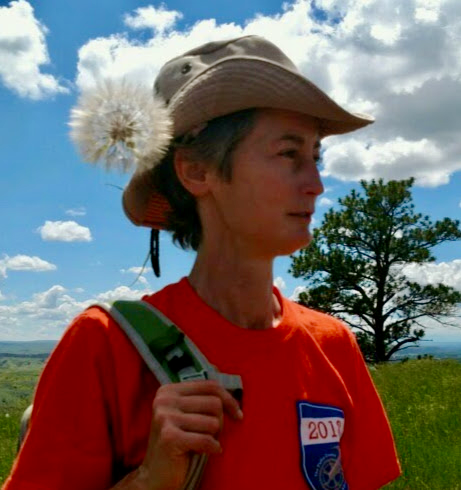
Anne lives in Greenwich, NY and since 2019 has been Betterbee's Head Beekeeper, teacher, and videographer (catch her on Betterbee's YouTube channel!). She first got bees in 1989 while getting a Biology degree, and like most of us, she was a "bee-haver" for just a few years, until she became a member of her local beekeeping club (the Southern Adirondack Beekeepers Association, or SABA), where she learned a lot from members and through club activities.
Anne became invaluable to SABA's operation and led the Annual Seminar and Bee School for many years. Beekeeping associations are so valuable to us because of the speakers and events, but also because of the casual networking, support, and mentoring that comes about when people find a group near them.
She became an EAS Master Beekeeper in 2002 and is still learning to this day. In her limited spare time, she reads sci-fi and rides her bicycle.