Beekeeping Invasions with Anne Frey (265)







Episode 265 – Beekeeping Invasions with Anne Frey
Beekeeping today looks very different than it did just a few decades ago, largely because of the steady arrival of invasive pests and pathogens. In this episode of Honey Bee Obscura, Jim Tew welcomes Anne Frey for a thoughtful, experience-based discussion on how beekeepers have responded to these challenges over time.
Jim and Anne reflect on the early days of tracheal mites, the arrival of Varroa, and the emergency treatments that once dominated management strategies. They discuss how research, regulation, and practical experience gradually replaced panic-driven responses, leading to more stable—though still imperfect—approaches to colony health. The conversation also revisits Colony Collapse Disorder, how public understanding diverged from beekeeper reality, and what long-term data revealed about recurring cycles of loss.
Looking forward, Jim and Anne turn their attention to emerging threats such as Tropilaelaps mites and the yellow-legged hornet, emphasizing the role of human movement in spreading invasive species. While the challenges are real and ongoing, they agree that today’s beekeepers are better equipped than ever to adapt, monitor, and respond.
This episode offers perspective, historical context, and plain talk for anyone trying to understand how modern beekeeping arrived where it is—and why adaptability remains essential.
______________________

Thanks to Betterbee for sponsoring today's episode. Betterbee’s mission is to support every beekeeper with excellent customer service, continued education and quality equipment. From their colorful and informative catalog to their support of beekeeper educational activities, including this podcast series, Betterbee truly is Beekeepers Serving Beekeepers. See for yourself at www.betterbee.com
______________________
Honey Bee Obscura is brought to you by Growing Planet Media, LLC, the home of Beekeeping Today Podcast.
Music: Heart & Soul by Gyom, All We Know by Midway Music; Christmas Avenue by Immersive Music; original guitar music by Jeffrey Ott
Cartoons by: John Martin (Beezwax Comics)
Copyright © 2026 by Growing Planet Media, LLC

[music]
Dr. Jim Tew: Hey, podcast listeners here at Honey Bee Obscura. It's Jim, and I got a special event today. Our old friend Anne Frey is back. Anne, say hi.
Anne Frey: Hi, Jim.
Jim: Glad to have you. I always enjoy your talk. It's good to have somebody besides me talking to my wall.
Anne: Well, that's not a pretty picture.
Jim: That's not a pretty picture. It's a sad, old man talking to his wall and to some people on a podcast, but I love doing it. I'm glad to have you here with me to help me get through it.
Anne: Thanks.
Jim: Speaking of getting through it, Anne, we've been through a lot in this whole bee thing; a lot of invasions, a lot of changes. I wonder if you and I could talk about changes that we've been through, and how the industry has modified, and where we are today, and what modifications we may have coming in the future?
Anne: All right, sounds good. "Invasions."
[music]
Jim: Give it your best shot here because I'm going to follow your lead.
Anne: All right, I'm ready.
Jim: Listeners, I'm Jim Tew, and I come to you here at Honey Bee Obscura about one time a week, where I try to talk about something to do with Plain Talk Beekeeping. This time, I have a co-host who is?
Anne: It's Anne Frey from Betterbee again, Jim.
Jim: I'm always happy to have you here.
Anne: Thanks.
Introduction: Welcome to Honey Bee Obscura, brought to you by Growing Planet Media, the producers of The Beekeeping Today Podcast. Join Jim Tew, your guide through the complexities, the beauty, the fun, and the challenges of managing honeybees. Jim hosts fun and interesting guests who take a deep dive into the intricate world of honeybees. Whether you're a seasoned beekeeper or just getting started, get ready for some plain talk that'll delve into all things honeybees.
Jim: Anne, when did you start keeping bees? Not that I'm challenging you. I'm just trying to get a timeline for where you started in this experience.
Anne: Sure, the timeline from the deep past. I started in 1987.
Jim: Well, that's a respectable time. '87 and '84, we were getting Varroa in Ohio. Did you ever know bees without Varroa?
Anne: No, and for probably three or four years after I started, I had no idea if there was even Varroa. I was a typical beginner without much of a clue. I never knew anything different.
Jim: Well, I don't know that that's an atypical beginner. Beginners by design are beginners, but--
Anne: Yes, I meant to say, "I was a typical beginner."
Jim: Yes, "A typical." I'm sorry. That's hard to say, isn't it? You were "a typical beginner," not "an atypical beginner." All right, let's move on. I'm sorry for causing confusion with that. Beekeeping, I don't want to reminisce, but beekeeping has really evolved just in my life. I got in on the last ears of the biggest thing we had to worry about was American foulbrood, and it was terrifying, and all you could do was burn. Then we had antibiotics, and we put antibiotics on everything and anything that was freewheeling and dealing to suppress American foulbrood, and look at where we are now. American foulbrood is just a dangerous footnote, but it's a footnote.
Anne: Yes, it seems like a real rarity now. If the inspectors mention how many they've seen, it's very low numbers every year when they do their reports, but Varroa came, and now, we talk about Varroa all the time.
Jim: Well, why don't we talk about tracheal mites anymore? What was your experience with that?
Anne: Oh, yes, can't skip the tracheal mites. My experience with that was, I had never seen them. I saw pictures. Of course, they're just so tiny. They live in the trachea, but presentations and conferences, and things was where I learned. Back then, people, just, were buying menthol, mixing it with Crisco and sugar, and giving them these menthol patties like a feeding/miticide thing, and everyone was doing it, so I did it. It was just what was done way back then.
Jim: I did it, too, and we all smell good. Our bee room smelled good with the menthol there. It was a far improvement over the usual musty bee odor that was there, but everything smelled like menthol. The bee yard smelled that way.
Anne: Yes, and now, there's not even menthol in any bee catalogs. It's just a thing of the past. That might actually be because of Varroa and the treatments that developed to kill Varroa, because those acidic treatments, those fogging sorts of things like formic acid, they kill tracheal mites too. Tell me what you know about what happened with tracheal mites besides formic acid.
Jim: The beekeepers who had been experienced with these in Europe and England specifically said it wasn't a big deal. Well, that was unnerving to those of us because we were going crazy. I shouldn't say we were going crazy; we were trying to be proactive. We didn't know what we were doing. This was our first outward invasion, so we cut our teeth pretty much on tracheal mites. We had not yet fully gotten into the Africanized bee thing. That was still coming down the pike.
Everybody thought this was going to be the end of the world as we knew it, and so a lot of colonies were sacrificed. A lot of commercial guys were damaged, down in Texas, and anytime they pulled a trachea, there seemed to be mites in it. At some point, APHIS just gave up, but not until quite a number of tens of thousands of colonies had been killed to try to contain this thing before they gave up. Using that as a role model, when Varroa came in, there never was a real project of killing bees to suppress it. It was always a treatment issue.
Anne: They quickly got an emergency permission to have that very first miticide, the pair, I guess, Apistan and Checkmite, they were rushed through. It seems like whenever there's an invasion of something, there's an emergency permission to get something happening, and then that's pulled back, and other treatments are developed that are probably less draconian, less horrible. I have to say, I think Checkmite was a pretty horrible chemical, coumaphos in the Checkmite, but for a while, everyone thought that was great stuff until more research was done.
I think that everything we're describing is a pattern that just keeps getting repeated. There's initial confusion, and then there's an emergency action, and while that's going on, there's research, and then more and more and more research, and then possibly some control or learning to live with the new invader through changes that we make ourselves with how we deal with management, et cetera.
Jim: I was struck by what you were saying and sitting here wondering, at what point do you say the treatment is worse than the disease? I don't know where that point is, but at some point, you've got to just throw in the towel and say Varroa or Tropilaelaps or whatever has won, and-
Anne: It's here.
Jim: -it's just here. I don't have an answer to that, but I'm not even going to go back. Did you ever make your own strips? In the earliest days, there were no strips. I don't want to give product names. I'm not trying to suppress information. If people really want it, you go to the web and find it, but I don't want to say it again here. We dipped quarter-inch plywood strips and an off-label material that was sanctified, for a brief time, under desperation measures, to knock Varroa populations down.
Anne: Yes, I've heard of that. I have to confess, I was never attracted to do any of that homemade, "Let's use this porous material and dip it in this dangerous chemical." I never did any of that stuff. It may have been because I was a new mother at the time, or I didn't read enough of those wild recipes, and I'm not sure. I was more "learn from my local club" kind of style and might have done it if somebody in the local club recommended it, but I never heard of those things until much, much later.
Jim: Well, they were very brief. At the very first, when it was perceived to be an outright emergency, they were not illegal. They were emergency recommendations until they could get the product out there, manufactured. This is a gloomy conversation. Let's take a break and hear from our sponsor, and then we'll come back, and I promise, listeners, we'll brighten this up into something really cheerful. At this point, Anne, I just don't know what.
Anne: All right, Jim.
[music]
Betterbee: For more than 45 years, Betterbee has proudly supported beekeepers by offering high-quality, innovative products, providing outstanding customer service, many of our staff are beekeepers themselves, and sharing education to help beekeepers succeed. Based in Greenwich, New York, Betterbee serves beekeepers all across the United States. Whether you're just getting started or a seasoned pro, Betterbee has the products and experience to help you and your bees succeed. Visit betterbee.com or call 1-800-632-3379. Betterbee, your partners in better beekeeping.
Jim: Well, Anne, we've been through a lot in beekeeping. It seems normal. I tried to write an article for one of the bee magazines several months ago. When do you admit that average now is not what average once was a few decades ago? I used to have an average winter kill of 4% to 5% and that was pretty bad. 9% was terrible. Now, if I can keep it under 30%, that's great. 40% is normal.
Anne: Wow.
Jim: When do averages change, and how do we evolve in that way with these invasions and things that are coming along? What's your average winter kill now, and what was your average winter kill 25 years ago?
Anne: The averages changed. To my memory, Jim, it seems like that was something that got really, really bad around maybe 2005 or 2006, and that was when research really seemed to take off because that, back then, was what the big mystery was, what we ended up calling "Colony Collapse Disorder" and people started taking decades-old bee bodies out of storage and testing them and testing the ones that people had in their hives that died and it was a really amazing flurry of research.
Though the public didn't want to accept that CCD disappeared after just a few years, it did fade away, or the explanation of it was modified so that people really started saying things more about mites and viruses much more, and possibly Nosema. There was definitely a disconnect between what the public understood and what beekeepers understood, if you went to conferences and read the papers.
Jim: That was a nice overview that "not even remembered CCD" after all the hysteria and concern, and I'm sitting here thinking of the invasion things we've dealt with, and I've momentarily forgotten that. I need to almost lower my voice. These CCD-type cycles come along at erratic intervals. They used to be called "Spring Dwindling, Autumnal Collapse, Disappearing Disease." It had all these other names, and so you can go back literally 100 or so years and find that we had these mysterious die-offs.
Anne: They not only researched biological things, they went back and checked records, and they found that similar descriptions have come and gone through the decades. It's new that we have Varroa, but they did discover that a lot of these viruses were present when they did DNA checks on old samples. It's just that we're learning more about them now.
Jim: Anne, are you saying that Varroa was vectoring those viruses and early samples or that those viruses were NRBs and other carriers besides Varroa?
Anne: The second one.
Jim: They were there already; Varroa just made the distribution better, more efficient?
Anne: Possibly, some of them were there already. It has something to do with the way, when Varroa are parasitizing the bees and the larvae, they're biting right through the side of the body, and they're letting the viruses get injected directly into the hemolymph. It's a different way of spreading the viruses, and they are definitely worse when Varroa is present.
Jim: I'd not heard that before. That's a logical way to perceive it, that the viruses have been there, but I'd like to think that, to some extent, the bees had some kind of resistance they had developed, but maybe just to the increased level, and virus particles are always changing in their potency.
Anne: Yes, they're always changing and adapting and evolving, and they have quick little life cycles; they change quickly.
Jim: Well, beekeeping certainly is not exactly the same now as it was when I started. I'm not the oldest beekeeper alive. I'm getting to be up there, Anne, but I'm not the oldest, so I don't want to speak like some industry historian, but it's changed a lot in many ways. A lot more plastic, a lot more electronics.
Anne: Yes, and now, we're used to Varroa, and tracheal mites faded away, but now, we have new invaders.
Jim: Yes, so will Varroa ever fade away once we get these new invaders? We're going to get them, aren't we? There's no reason to think we can keep these next round of invaders out. Have you heard anything? Can you give an overview of what we're worrying about?
Anne: Well, recently, it was discovered that the yellow-legged hornet, which was found in Georgia and southern South Carolina, has basically jumped the entire north-south distance of South Carolina, and it's been found in northern South Carolina. Due to the way its life cycle goes and the fact that no one had found it up there, the idea now is that it was moved by humans accidentally, like in some potted trees or something like that that had been brought down the highway.
The spread is inevitable; it's just that people are getting used to identifying it. The learning is still going on on how to deal with its nests. There's an early nest, a small version of the hornet's nest that the public can find and scoop up without much danger, and keep it in a jar and put it in the freezer, but when they get big, it's just this huge, huge nest, it's a secondary nest, and then you need professional help to get rid of it.
They're trying to educate the public on identifying it. Not just beekeepers, but the general public, and give them ways to fight it by telling them about their life cycle. It's early days, but I feel like it's going to spread west and north from Georgia and South Carolina.
Jim: Just to be clear, do these wasps attack honeybees?
Anne: The yellow-legged hornets are known amongst the beekeeping community because they do actively hang around the fronts of beehives and hover there and catch the bees that are going out or in. That's called "hawking." They deplete the population. Sometimes they actually go in the hive and start hunting around in the hive, but the bees generally mob them then and make a heat ball around them. A few of these hanging out by the entrance of your hive, constantly picking off your bees, is damaging to the hive, the colony.
Jim: I have common yellow jackets going in mine in the autumn of the year, every year. I've spent a lot of the last few years watching entrance behavior, and I tried to figure out if they were selecting weaker colonies or more rundown colonies or if they were just selecting any colony, and I don't have any results.
Anne: Well, we'll probably think our normal little yellow jackets are cute little teddy bears if the yellow-legged hornet spreads.
Jim: Well, I guess we had said we were going to brighten things up, and we didn't. We haven't even talked about Tropilaelaps Varroa. Are we still dreading that and watching and monitoring?
Anne: The new mite, Tropilaelaps? Yes, we're dreading it, and the people in Europe are dealing with it. It came into Europe from the east. They're researching it, they're finding new ways of detecting it, new ways for beekeepers to identify it because it's so much smaller and it has a different sort of life cycle than Varroa. We can't use our usual techniques for counting, say, Tropilaelaps' mite count. Yes, it's going to be a while, I'd say, before it jumps across the Atlantic Ocean to us, but I feel like it's inevitable, mainly because of humans moving things around the world.
Jim: Yes, we always seem to do that. Right now, would you say that things are a bit steady-state in beekeeping? There's no Colony Collapse Disorder running rampant? We've got control techniques that seem to contain Varroa. It's never going to eradicate.
Anne: Yes, I think I'd agree with that.
Jim: We seem to be fairly stable right now.
Anne: I do think I can agree with that. There's a few new miticides being developed every few years, and people have more choices. It's not as desperate as way back in the beginning when there was the emergency of miticides, "Quick, approve it. Oh, it's dangerous, get rid of it." It's more steady now, as you say.
Jim: As always, we were concerned about the byproducts of these materials turning up in our honey crop and then the public getting concerned, so we seem to be as good as we can be right now. It won't last, but enjoy the day while it's here.
Anne: Keep working at it.
Jim: You get any overview you want to make, or we want to just tell the whole audience we've done the best we could to discuss invasions and evolution to invasions in a conversational manner?
Anne: I think we've done all we can with the time we have today, Jim. It was a good overview, but maybe we'll touch upon it in another podcast in the future.
[music]
Jim: Yes. A lot's happened in the last 40 to 50 years. A lot happened, but when was a lot not happening in beekeeping with world wars and all those things? Everything always is something different if you're in that era.
Anne: That's life.
Jim: I always enjoy talking to you. Let's do it again as soon as we can.
Anne: Thanks, Jim. I do, too. It's always a good time.
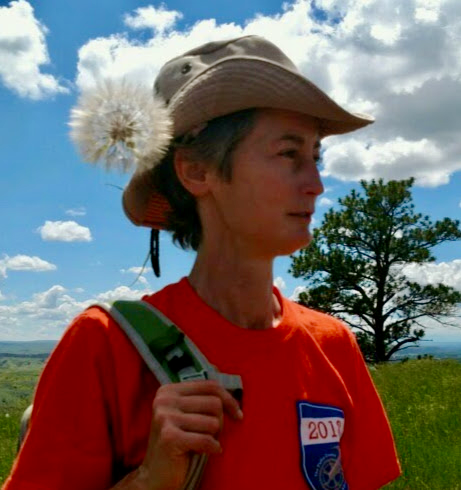
Beekeeper and Educator
Anne lives in Greenwich, NY and since 2019 has been Betterbee's Head Beekeeper, teacher, and videographer (catch her on Betterbee's YouTube channel!). She first got bees in 1989 while getting a Biology degree, and like most of us, she was a "bee-haver" for just a few years, until she became a member of her local beekeeping club (the Southern Adirondack Beekeepers Association, or SABA), where she learned a lot from members and through club activities.
Anne became invaluable to SABA's operation and led the Annual Seminar and Bee School for many years. Beekeeping associations are so valuable to us because of the speakers and events, but also because of the casual networking, support, and mentoring that comes about when people find a group near them.
She became an EAS Master Beekeeper in 2002 and is still learning to this day. In her limited spare time, she reads sci-fi and rides her bicycle.
