Georgia Winter Visit with Anne Frey (272)
Anne visits Georgia in mid-winter and compares southern beekeeping practices with northern management. Jim and Anne discuss syrup feeding, nectar dearths, small hive beetles, varroa control differences, and why climate shapes every beekeeping decision.






This week on Honey Bee Obscura, Jim and Anne take listeners south — to Georgia — for a mid-winter comparison of beekeeping realities.
Anne recently visited beekeeping friends near the Atlanta latitude and found that while Georgia winters are milder than New York or Ohio, they come with their own management challenges. Unlike northern operations that rely heavily on solid winter feed, Georgia beekeepers depend on syrup feeding much of the year due to extended nectar dearths following an early June harvest.
Jim and Anne discuss the practical art of “hefting” colonies to estimate food stores, why winter management differs dramatically between regions, and how a long nectar gap — whether in the South after June or in the North after goldenrod — requires careful planning.
They also compare small hive beetle pressure and varroa control strategies. In central Georgia, small hive beetles are a more visible and persistent concern due to milder soil temperatures, and oxalic acid treatments are more common than formic products due to higher seasonal temperatures.
From single deep brood chambers to syrup-based feeding strategies, this episode highlights how geography shapes beekeeping decisions.
______________________

Thanks to Betterbee for sponsoring today's episode. Betterbee’s mission is to support every beekeeper with excellent customer service, continued education and quality equipment. From their colorful and informative catalog to their support of beekeeper educational activities, including this podcast series, Betterbee truly is Beekeepers Serving Beekeepers. See for yourself at www.betterbee.com
______________________
Honey Bee Obscura is brought to you by Growing Planet Media, LLC, the home of Beekeeping Today Podcast.
Music: Heart & Soul by Gyom, All We Know by Midway Music; Christmas Avenue by Immersive Music; original guitar music by Jeffrey Ott
Cartoons by: John Martin (Beezwax Comics)
Copyright © 2026 by Growing Planet Media, LLC

Episode 272 – Georgia Winter Visit with Anne Frey
Jim Tew
Hey, Honey Bee Obscura podcast listeners. It's Jim here with Ann Frey from Better Bee. Hi, folks. We've got a morning plan for you, or an afternoon, or whatever time it is for you. Ann had the good luck to be able to go down to Georgia and hang out for a while. I don't think it's been warm anywhere, has it, Ann? But it was warmer than here.
Anne Frey
Well, yeah, it was warmer than here a little bit. It was still down to like 10 at night, and they had some snow too while I was there. But in the day, it was nice. It was like 40 or 50.
Jim Tew
Well, at least that was a break. Listeners, I know I've talked about it a lot, but this has really been a winter. I think Ann will support me in that. I always know that there's other states that have it this cold all the time, and then there's Canada that's up above us here. It's cold. But I'm just not used to this, Ann, this persistent cold.
Anne Frey
for so long. I think this is the coldest winter I can remember, but it started out just seeming like a normal winter with lots of good snow, like as winter should be. Listeners, we're going to
Jim Tew
take a trip to Georgia and let Ann describe some of the experiences she had there and some of the things that the Georgia beekeepers have talked to her about. I think it'll be very entertaining for all of us just to take a break from our complaining about the weather. Welcome to Honey Bee Obscura.
Introduction
Brought to you by Growing Planet Media, the producers of the Beekeeping Today podcast. Join Jim Tu, your guide through the complexities, the beauty, the fun, and the challenges of managing honeybees. Jim hosts fun and interesting guests who take a deep dive into the intricate world of honeybees. Whether you're a seasoned beekeeper or just getting started, Get ready for some plain talk that'll delve into all things honeybees.
Jim Tew
And just so people in Georgia will know, and everybody else too, where were you in Georgia, and where did you start from?
Anne Frey
Well, I took a vacation and visited some friends in Florida, and then I came up and visited some friends in Georgia at about the same latitude as Atlanta out in the country. They're beekeepers too. And visited my friends Mary and Jeff for about seven or eight days. Also gave two presentations to Georgia groups while I was down there.
Jim Tew
What were some of the points that you picked up? What was the differences? I ask, you started from Betterby in New York, right? I mean, it's dead cold. You're not doing any bee work. So what were some of the primary differences? What were some of the seasonal differences? So 40 degrees during the day, 10 degrees at night, they have to re-cluster. Any pollen? What did you see going on?
Anne Frey
There was no nectar or pollen coming in on the one day that I saw a few bees flying. And my friend Mary told me that they don't usually have a whole week of no flight. They get some cold nights, but it's pretty frequent that there's flight days every few days. And so this was very unusual for them too. Since they don't have a lot of days with no flight, if they need to feed, they always use syrup. They never use solid feed like we might up here. So that was one big difference. There's a lot more syrup feeding necessary down there because their nectar flows aren't as wonderful as in the northern parts of the United States. They might just have nectar flow from April through June and then never again. You know, just maybe some bits here and there like to subsist on and they need constant syrup feeding.
Jim Tew
I would agree with that. You know, with what's left of my accent and most people know I grew up and started keeping bees in South Alabama. And the nectar flow was more dilute. It was more spread out. It wasn't intensive. and the farther north I've lived, the shorter and the more intensive the nectar flow seems to be. In Alabama, it was just this long, lazy flow that never really, you know, was just never crazy productive and then when it was done, it was done. Was there an odor? Well, there was no honey coming in. I was about to ask if there was an odor because some of the honey in Alabama had a very distinctive odor from tie-tie.
Anne Frey
You mean like ours with the goldenrod?
Jim Tew
Right. It had an odor like goldenrod, but it was a very specific odor from this holly plant, this wild holly plant, tie-tie. It's like a tree? No, it's like a shrub, a big shrub.
Anne Frey
No, no smell, nothing like that. The most we ever did during that week was stand next to each hive and lift up one side of it to get a feel of the weight. And we did discover a few that were definitely going to need to be fed. And she went and fed them as soon as she could. Right after I left, they actually got a 65-degree day. And it was, you know, hefting is something I talked about in the two presentations I gave as an easy way to gauge if the hive is in desperate straits and is running out of their food.
Jim Tew
Go with the hefting thing for those people who might be somewhat new to beekeeping. Describe hefting.
Anne Frey
If the hive is on a stand with other hives, like long sets of 4x4s maybe, which is what they had there, I would say heft it from the side so that you're always getting the same style of tip. because it might be placed differently on the 4x4s. And if you tip from the back, you would get like a wrongly lightweight feel, depending on how much was sticking out past the front 4x4. Does that make sense?
Jim Tew
It does. I think you're describing a fulcrum. Yes, exactly. You're describing a fulcrum. So you need to know where the fulcrum is. Is it going to be easy to pick up or is it going to be far back? It's a relative thing. The one thing I used to understand was that if you couldn't move it at all, that's good. I mean, I don't care about the fulcrum. If it won't move, that's good. Or, this is important, Ann, it's frozen down. Because when I first moved here, I was not prepared for colonies to be frozen down. And so I made a few silly mistakes at first. But you just tilt the colony, like you said, from the side or from the back.
Anne Frey
Yeah, grabbing the bottom.
Jim Tew
And if you do it long enough, if you do it, you know, for a while, for years, for seasons, and you know your own strength and you know your own bees and you know your own hive stands, you can get an estimate of what's in that bee box.
Anne Frey
Yeah, that's all I mean by hefting. This has all gotten a little bit technical about a simple procedure. You're just lifting it up, lifting it up maybe one inch and setting it down gently. And if you do that kind of thing throughout the year, you know, you get a sense of what each feel means. Because you might in the summer be looking inside the hive after you heft it and say, oh, yeah, they have lots of honey. That's what that heft meant. And things like that give you a kind of muscle memory.
Jim Tew
The reason I went into this so much was because I had an incident many, many, many, many years ago. And maybe you don't know this, but beekeepers are highly opinionated. What? Breaking news, isn't it? And they don't always have the same opinion. Well, I'm not sure if I agree with that. So I was describing this. No, don't go into that like that. I was describing this event to some beekeepers here. They were in Medina, just up the road from me. And two beekeepers tied up. One guy said hefting was the wrong thing to tell new beekeepers. They needed to open the hive and look. And another guy said that he tilted colonies all the time. And they just went fist to cuffs. So I've always been sensitized now when I talk about tilting colonies because I know that that particular night, as a young apiculture professor, I had to monitor and separate these two guys who had diverse opinions on this simple process. So that's why I went into it so much. I know people agree or disagree, and that's why I was explaining in so much detail.
Anne Frey
Well, I think that beginners also don't understand that there's other ways to detect what's going on inside a hive besides looking at frames. You know, in the winter, besides lifting the frames, I mean, you could stare between the frames and see which ones have capped honey puffing out from the sides. but that still only tells you what's going on at the top of the frames. So I really do trust hefting if it's practiced through the year and through the years.
Jim Tew
In a perfect world, I'd have on one of those electronic hive monitors of some kind, and I'd be sitting inside watching the colony game, wait, lose weight, or whatever. But that's part of my spring plan. I don't know that I have them on every colony. I just have some in the yard to be an indicator of what was going on. We need to take a break and hear from our sponsor. And when we come back, I want you to tell me about what they were doing about small high beetles and varroa in central Georgia.
Betterbee
For more than 45 years, Better Bee has proudly supported beekeepers by offering high-quality, innovative products, providing outstanding customer service, many of our staff are beekeepers themselves, and sharing education to help beekeepers succeed. Based in Greenwich, New York, Better Bee serves beekeepers all across the United States. Whether you're just getting started or a seasoned pro, Better Bee has the products and experience to help you and your bees succeed. Visit betterbee.com or call 1-800-632-3379. Better Bee, your partners in better beekeeping.
Jim Tew
How were they handling Varroa, or how were they suppressing Varroa populations and small hive beetles? And what were their issues like that, or did they discuss it with you? Not necessarily in the winter, but just in general.
Anne Frey
Oh, in general. Well, speaking of your two guys fighting in your class and had to be taken outside, my friend did warn me that some people felt that small hive beetles might be more of a problem than Varroa, And some people insisted that Varroa was the biggest problem. So I was ready for something like that, that kind of tussle to start. So small hive beetles are much more of a concern to them. And they see more of them on an average inspection. They might see the adults walking around on the combs in a strong hive, whereas we only ever see the adults hanging out on the top of the inner cover hiding. And, you know, it's really different. They still don't ever want to see any larvae in the hive because that means things are out of control. But many more adults are seen and they use a lot more hive beetle traps than we do up north. Seems to be that it has to do with the fact that they don't usually get extended hard freezes of the soil down there and they don't get, well, we don't get such a constant influx of hive beetles because our hard freeze kills a lot of the pupae that were in the soil. Would you agree that that's the reason that it's worse in the south is the middle phase of their development when they're down in the dirt?
Jim Tew
Yes, I would agree that that's certainly one reason, but I'm not affluent enough and small hive beetle, serious populations of small hive beetles, to know if that's the only reason. I don't know if heavy rain or no rain or other factors, but certainly this cold, this has to be meaningful. This has been minus, you know, at 16 degrees below zero here, which is cold for this area.
Anne Frey
I hope that it helps my friends down in Georgia to have less hive beetles this spring. And they do worry about Varroa, of course. Everybody's concerned with Varroa too. Their go-to miticide is not Formic Pro, which ours is up here. They can only use Formic Pro like in the earliest part of the spring. And by the time we're just coming out of waiting for dandelions to appear in April, they're already too warm to use Formic Pro. So they're using different things like Veroxan or repeated oxalic acid dribbles, things like that. And repeated oxalic acid was way more common in discussions with people down there. We only do like one in the wintertime and a vape or a dribble, just a single shot.
Jim Tew
When I see small hive beetles here, I'm not gloating, but I'll stop everything and try to get my phone out with my camera or run back to the shop and get my camera. And then by the time I get back out, the two or three that I saw are gone. So I'm not gloating, but I've just never seen small high beetles. I can tell you how to make an easy mistake, though, here in northeast Ohio with small high beetles, and that's to bring in five or six supers of honey and don't extract them right away. Let them sit for three or four days, and under those conditions, you can get rampant small high beetles taking over that unprotected honey.
Anne Frey
There might be, I mean, certainly there probably are eggs and the teeniest little larvae already in those combs. And with no bees to chomp on those baby beetle larvae, they're just going to grow and grow. It takes three days for the eggs to hatch, but there's probably already some teeny weeny larvae in there when you carry them in.
Jim Tew
Yep. Without those bees to maintain the hygienic procedures and keep them under control, they will explode in populations. So that's been my experience was just being a poor beekeeper and letting honey sit too long one time.
Anne Frey
Yeah, people learn from mistakes. I visited somebody one time and helped him get his supers off his hive. I said, so are we bringing these in the kitchen? And he's like, no, no, put them right here in this shed and I'm going to cover them up. I said, oh, well, you know, I could carry them in. You're going to extract them tomorrow. Why should you have to move them again? And he goes, no, no, I'm not going to extract them tomorrow. I'm going on vacation tomorrow. Oh, no. And I'll extract them when I get back in two weeks. And I said, no, no, no, no, no. You can't do that. You know, we've got to put these back on the hive. He was, you know, he was new. He didn't realize that.
Jim Tew
Well, I'm glad you were there to shut that down. That would have been a huge mess. I promise you.
Anne Frey
Oh, yeah.
Jim Tew
That would have been a huge mess. This is not accusatory. You know, people make their best guesses in the autumn. How did your friends underestimate the necessary winter stores that would require winter feed? Is this just something you do? There was not much of a honey crop or they took too much honey off or what?
Anne Frey
Yeah, it's more like it is their habit. They see it as a necessity to feed after harvesting in late June. Because if they didn't feed, they would have to leave the entire harvest on and they would never get any honey to sell. So it's not that they underestimated or anything like that. It's just the way things are done. So the harvest is in June. That's that. And from then on, feeding if they are running out. Or just sort of constant feeding and constant checking. I think it's probably really hard for someone whose harvest is in June to figure out how much to leave to get them all the way through to late February.
Jim Tew
Well, I was giving your beekeeper friends a lot of leeway. I mean, I've probably got dead, I'm sure I do, got dead colonies right now. And they have 50 or 60 pounds of honey on, but sometimes other factors supersede.
Anne Frey
Yeah, in a way, it's the same length of time. For us, you know, we might harvest in early September and we won't really see them coming out of winter until mid-March. And that's the same like seven-month length of time that they had to wait before they can get into them for, you know, the increase of the population coming in their spring.
Jim Tew
One person's vanilla, someone else's chocolate, because even as we speak right now in early February, I've already seen pictures coming in from northern Florida of plants already in bloom. There won't be anything in bloom here for weeks and weeks and weeks. So while your Georgia friends don't have anything from June on, we don't have anything really from, what, October, November? when goldenrod and astrophase is out, we don't have anything until, what, March? April, March?
Anne Frey
It might be five and a half, six and a half months for maybe even seven for people in Georgia or up north here.
Jim Tew
Yep, I've never really thought about what a long dearth that is. I've called that the big dearth, but I've never really put a number on it, but it's more than half the year, isn't it, that the bees are quiescent without any problems? Any stores coming in?
Anne Frey
Another big difference down there was that a single deep is the norm. For us, quite often a double deep is the norm, especially for beginners, because then they have a big buffer of honey and they don't have to worry so much as long as those are both full when fall is halfway through and winter is going to start. Down there, it's a single. And it's just that got a little hard to think about and adjust my talking when I was giving presentations.
Jim Tew
Just thinking doubles.
Anne Frey
Yeah. I think I'm going to try this summer doing some singles or a single and a medium, which strangely some people call a deep and a half, which is let's not get into it.
Jim Tew
Well, it's a deep and a big half.
Anne Frey
Right. I might try some more deep and medium as my brood chambers. and kind of ease towards the single brood chamber.
Jim Tew
Ann, we're out of time, but I'm glad you had a nice time, and I'm glad you got a break. I have not had a break. I've been here. You seem like you've come back exhilarated and ready for our spring season, if it ever gets here.
Anne Frey
Yeah, it was a really good vacation, thanks to my friends Mary and Jeff in Georgia and Vicki and Jay in Florida.
Jim Tew
If any of you southern beekeepers want to point out things that we didn't know to say, we're here and I will try to dutifully record your comments later on, unless there's thousands of them. But if there's enough that we can manage, we will post your comments. Hey listeners, we're Ann and I telling you bye. We'll talk to you again soon. See you later.
Beekeeper and Educator
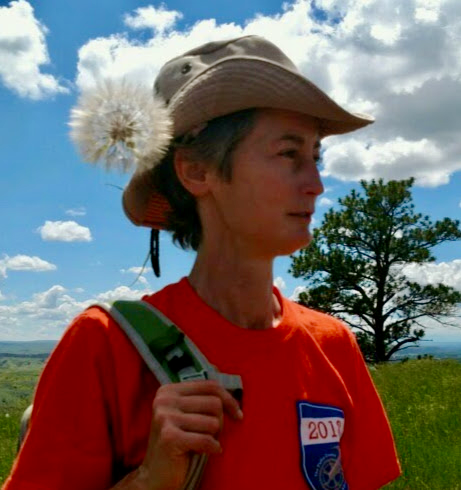
Anne lives in Greenwich, NY and since 2019 has been Betterbee's Head Beekeeper, teacher, and videographer (catch her on Betterbee's YouTube channel!). She first got bees in 1989 while getting a Biology degree, and like most of us, she was a "bee-haver" for just a few years, until she became a member of her local beekeeping club (the Southern Adirondack Beekeepers Association, or SABA), where she learned a lot from members and through club activities.
Anne became invaluable to SABA's operation and led the Annual Seminar and Bee School for many years. Beekeeping associations are so valuable to us because of the speakers and events, but also because of the casual networking, support, and mentoring that comes about when people find a group near them.
She became an EAS Master Beekeeper in 2002 and is still learning to this day. In her limited spare time, she reads sci-fi and rides her bicycle.
