Package Bees with Anne Frey (270)
As spring approaches, Jim Tew and Anne Frey talk through the real-world decisions behind ordering, transporting, and installing honey bee packages. From how many colonies to buy to the risks of overheating during travel, this episode offers practical, experience-driven guidance for beekeepers preparing for the new season.


In this episode of Honey Bee Obscura, Jim Tew welcomes Anne Frey to explore the practical and often uncertain process of preparing for spring package bees. Together, they discuss one of the most common beekeeper questions—how many colonies to order—highlighting that the answer depends not only on winter losses, but also on personal goals, budget, and the balance between enjoyment and workload in beekeeping.
The conversation then shifts to the realities of transporting packages safely. Jim and Anne emphasize that overheating is the greatest danger during travel, noting the importance of airflow, spacing between packages, and avoiding enclosed vehicles or unnecessary stops that allow temperatures to rise. They share field experiences ranging from hauling large numbers of packages in trucks to improvising cooling strategies with water and ventilation—illustrating how quickly confined bees can become stressed or perish without proper care.
Beyond logistics, the episode reflects on the evolving motivations of beekeepers over time. Jim candidly considers scaling back to a smaller, more enjoyable number of colonies, while Anne reinforces that maintaining fewer hives can still be a meaningful and successful beekeeping path. The discussion ultimately returns to the excitement of beginning each season anew, reminding listeners that thoughtful planning—and keeping beekeeping fun—are just as important as the bees themselves.
______________________

Thanks to Betterbee for sponsoring today's episode. Betterbee’s mission is to support every beekeeper with excellent customer service, continued education and quality equipment. From their colorful and informative catalog to their support of beekeeper educational activities, including this podcast series, Betterbee truly is Beekeepers Serving Beekeepers. See for yourself at www.betterbee.com
______________________
Honey Bee Obscura is brought to you by Growing Planet Media, LLC, the home of Beekeeping Today Podcast.
Music: Heart & Soul by Gyom, All We Know by Midway Music; Christmas Avenue by Immersive Music; original guitar music by Jeffrey Ott
Cartoons by: John Martin (Beezwax Comics)
Copyright © 2026 by Growing Planet Media, LLC


Episode 270 – Package Bees with Anne Frey
Dr. Jim Tew: Hey, podcast listeners here at Honey Bee Obscura, I'm Jim Tew with Anne Frey from Better Bee. We're going to have bee visiting with you today, if you'll have us visit. We want to discuss with you some of the decision-making that goes into buying and hauling packages once you go pick them up. Anne, are you up for that? We're not going to go into great detail, but are you up for that?
Anne Frey: I'm up for it. I'm ready to start thinking about spring.
Jim: I am too. Listeners, I'm Jim Tew, and I come to you here about once a week at Honey Bee Obscura, where I try to talk about something to do with plain talk beekeeping.
Introduction: Welcome to Honey Bee Obscura, brought to you by Growing Planet Media, the producers of the Beekeeping Today podcast. Join Jim Tew, your guide through the complexities, the beauty, the fun, and the challenges of managing honey bees. Jim hosts fun and interesting guests who take a deep dive into the intricate world of honey bees. Whether you're a seasoned beekeeper or just getting started, get ready for some plain talk that'll delve into all things honey bees.
Jim: Listeners, and Anne, I have complained and complained and complained about the weather and used the weather as a crutch for my sloppy beekeeping habits. I know I've got to buy packages or splits. I'm going to count bees one way or the other. I'm undergoing the same thing other beekeepers undergo, and that's how many to buy, and when to order, and where to order. What's the comments, Anne? What's the thoughts you may have had so far?
Anne: It is hard to know how many to buy, and all the beginner classes or advice tells people, make your orders during January, or you won't be on the list because the supply is already gone or claimed. How do you know at that point what's going to happen for the rest of the winter? It's tough for a person to guess how many of their colonies might die. They might just ask their people in their club or look at what has happened to them in years past and estimate how many might have died.
They could listen to the sides of their hives with their ear pressed against it and see how many are still alive and make an order. Is there really any risk of buying too many bees? If you bought too few, you could make some splits or catch a swarm. If you bought too many packages, you could put the excess ones into a nuc or a single deep, and you might just have that as a backup. Let it grow up and maybe pass it to someone in your club who needs an extra hive.
Jim: I've got a painful comment on this. Is there any risk in buying too many? Please don't take this the wrong way. Please, please don't take this the wrong way, but the risk is money. If I bought more bees than I need at-- what's it going to be? How much can the packages cost? Do you think $140, $160?
Anne: Yes, something like that. When I said, help out a member of your club who might need that package, I meant sell it to them, or you could give it to them, whichever you like. Yes, it does cost a lot, and it's a gamble. How does any business or family plan for the future, is just based on what you've done in the past, how much you think you want to grow in the future. It's tough.
Jim: You said that very correctly. It's what you want. Jim, talking to myself at my age and where I am in life, exactly what do you want? I don't want 200 hives anymore. I can assure you of that. What do you want? I'd like to have 10, maybe 15. I'd like to have a home yard and one yard a few miles away. I want to play with bees. I don't want to work with bees. Go ahead and criticize me for that. I'm an old guy now, and I don't want to do all the youthful things I used to do. I'm the one who has to decide, do you want 10 packages and three splits or what? It's a personal decision.
Anne: It's funny that you mentioned 15 because when I was growing my numbers a long time ago, I realized after I got above 14 or 13 that it was starting to become work, and it wasn't quite as much fun anymore. If a person has always had X number, they can still be a good person if they have less than that one year. It's not like you always have to increase or always have to stay the same. It's your choice.
Jim: It's your choice. When you were saying those things you just said for the last five or six sentences, I was having about nine to 10 thoughts at the same time. It's your choice. That tilting point where you love it, you love it, you love it, you love it, wow, this is work. How many more frames do you have to build before you build enough? If what you used to love putting those frames together, suddenly it becomes monotonous and tedious to keep building these frames and to have to go out, and why does honey weigh so much, and why is honey so sticky? Now we're getting negative, or I am.
Anne: Hey, watch it.
Jim: Watch it. Shape up here, Jim. Keep beekeeping fun.
Anne: Let's talk about just starting out. Let's talk about those packages.
Jim: Starting out with those packages is just extraordinary. If you're a new beekeeper, it's just heavenly to get those packages the first time and to hear the buzz and that clean straw smell the bees have.
Anne: All those little tongues sticking out through the screen, going like tiny little wiggling tongues all over the place.
Jim: You can spray sugar water on them, and they are appreciative of it. When people show up, what advice would you have to tell them? Would you just put them in the trunk? Would you put them on the back seat? Depends on the vehicle. Depends on how many they're buying. Depends on everything, doesn't it?
Anne: Yes, it does. The main thing that I'm concerned about is that they don't get overheated. When they're being transported from the south up to us, they're all held rigidly in place in their trailer with staples on these crossbars, keeping quite a lot of space between them, maybe five or six inches of space on every side of each package. When people get more than one, they should put space between them for their traveling home. If it's going to be in the trunk and it's a hot day, I think maybe it would be better to have them in the air-conditioned main part of the car to keep them cooler. It's always about the heat. They can get overheated so fast.
Jim: The problem with overheating is that they can't do anything about it other than regurgitate what's in their crops. That gives them that wet look and then fanning. There's no way they can get water. There's no way they can get out of the hive or do their usual tricks because we've got them in a cage.
Anne: Also, when they get upset about being confined and hot, they start to run around inside of their package or nuc, and that overheats them. They get even hotter.
Jim: Other animals do that, too. When I was just a young kid, a neighboring farm had a big chicken broiler house, and a huge thunderstorm came through. Thousands of chickens all ran to one end of the building to get away from the storm. They suffocated all the chickens that were underneath that bulk of chickens piling up on the far end of the barn. I guess cattle stampede, I guess chickens suffocate each other, and I guess bees go crazy when you confine them.
Anne: Yes, a panic.
Jim: What would you do about leaking feeder cans? Is there any concern for that, the feeder cans?
Anne: Yes, there is some. It's more of a bumpy ride. I suppose it would also happen if the thing tipped over, then it's going to leak out of the holes. Also, severely bumpy ride makes it leak out of the holes. I think that they should just be aware of it and set their packages on something like maybe inside of a tote or on top of a floor mat or something like that. It's a valid concern.
Jim: Here I go again, being something less than positive. In an effort to be truthful, sometimes it comes out less than positive. Let me just tell you what I'm going to tell you, and then you reprimand me should I need it.
Anne: All right, I'm braced.
Jim: When I put bees in the car with me and live with them for a while, it makes my eyelids itch. It gives me a light rash on top of my eyelids.
Anne: Interesting.
Jim: I'm either allergic to bee hair, or the occasional fecal drop or something.
Anne: That's very interesting. I've never heard of that.
Jim: I get over it fairly quickly. If I had a car that had a trunk or a boot, I'd probably put them there and then race home, and maybe stop and open the door and be sure that they're still okay and prop them up.
Anne: I've never heard of that, Jim. That's very valid concern if that happens. I'm going to include that in the details about putting bees in cars. The people are usually worried about bees that might still be crawling on the outside of the package. They're worried about them getting loose if there's a car accident or something like that. You should definitely brush off the package with a bee brush before plunking them into the person's car, but it's probably one of two reasons ever to use a bee brush.
A pickup truck uncovered right up front in the open bed is really the best, and uncovered in the sense of the wind can get to them. You don't want them to be baking in the sun on the way home, but the cool wind of travel is going to help them a lot. Don't be saying, "We're just going to stop for lunch and park in the shade here. It'll be fine." The shade will move, and who knows how hot those bees are actually getting to be. Just get yourself home. You said race home, drive home normally, how about, and get those bees in the shade in your house, in your basement, install them later in the afternoon.
Jim: Now you're making me defensive. I didn't mean break the law, speeding home.
Anne: Oh, it sounded like you were going crazy on the drive home.
Jim: No, stop saying that. I was not going crazy. I was just getting home expeditiously without stopping for a long leisure lunch and being glad that my bees finally came in.
Anne: Yes, it's not done once you're pulling away from the place where you got your bees. You're still taking care of them until they're in the hive, and then after that.
Jim: Kim used to say that there was a tail light guarantee, that that package, and that queen was guaranteed as long as the seller could see your tail lights.
Anne: Oh, I like that.
Jim: When you're out of sight, those are your bees. If you want to pull off at the diner and spend an hour there having a lunch, it's your bees, your responsibility. There's no going back to the seller.
Anne: Yes, it's so frustrating to have a customer buy nucs or packages, and though as we put them in their vehicle, we explain, "That's too many to put in that space," or "You need airspace between these, that's not going to work." They go, "It'll be fine." Then later on, we get a call from that very same customer saying, "You sold me terrible-looking bees, half of them are dead." It's just like we actually keep records now of situations where a handout included a weird conversation like that, because we're wondering, "Are they going to call us back and complain about the state of the bees later?"
I'm also a bicyclist, Jim, and I have never been hit by a car, even though I've gone across the country multiple times. I attribute my success to never being cocky. I think that a lot of these issues with the beekeepers who do things that are ill-advised is that they're just cocky.
Jim: Are ignorant. Never mind, I'll take that word back. I shouldn't have said that.
Anne: Don't be cocky. My motto is don't be cocky.
Jim: Let's just go with the cocky. That's a better word than the one I was about to use. Let me just say uninformed. They're being cocky because they're uninformed. Let's take a break before I embarrass myself anymore and hear from our sponsor.
Betterbee: For more than 45 years, Better Bee has proudly supported beekeepers by offering high-quality, innovative products, providing outstanding customer service, many of our staff are beekeepers themselves, and sharing education to help beekeepers succeed. Based in Greenwich, New York, Better Bee serves beekeepers all across the United States. Whether you're just getting started or a seasoned pro, Better Bee has the products and experience to help you and your bees succeed. Visit betterbee.com or call 1-800-632-3379. Better Bee, your partners in better beekeeping.
Jim: We've talked about packages and hauling packages and keeping them cool, whatever it takes. If, I don't know, you get stuck in a car jam or your engine quits or whatever, you got to do whatever it takes. If you have to unload them by the interstate, and you got to keep in mind, I'm off the subject, but if you're working with bees, the public may not always rush up to give you a helping hand if they see you unloading 30,000 bees and you're the bee guru.
Anne: Yes. What happens if you're going down the highway and you get a flat tire or something bad happens, and you're exposed in the sun? Do you unload and trek them all across the grass to the tree line and put them in the shade? Yes, you do.
Jim: Yes, you do.
Anne: What if you stop to get gas and discover that there are some dead bees on the bottoms of the packages and the temperature is rising? What can you do? You said something about traveling with a garden hose, Jim, a while back when we were chatting before this. What was that all about?
Jim: I had a garden hose. I had about 100 packages in the back of a large straight truck. I had the thermocouple set up so I could monitor the temperature. They got steadily, steadily hot in that enclosed truck. I was afraid to open the doors. You made a reference to coming back home with the doors up.
Anne: One time, yes.
Jim: I had other equipment. I had hand trucks and other equipment, and I couldn't have that falling out of the truck. I bought ice at first. You can't buy enough ice to really accomplish anything. I began to use the water hose. You got to go in, make friends. "Hi, how's it going? Any chance that I could get up to a water spigot here, and turn this truck around and hose them down?" Then get in the truck in a cloud of dust, and a hearty hi-ho silver, and off you do go again until the temperature rises. I got them home.
Anne: Were you sprinkling the truck or the packages?
Jim: I was sprinkling the packages in the truck. It had the little hand sprayer on it. I was just wetting everything, trying to raise the humidity and to wet the packages enough for the bees to get some water. You don't flood them. You don't go crazy and just hose them down, like I guess the fire department would do. You just lightly just give them a good wetting, good damping, and that's it.
Anne: Then it evaporates. It's like a person putting water all over their face and head. Then, evaporation, it's getting cooler more easily. That was a big load of packages. The one you referred to, I was traveling with someone who was getting some hundreds, and he had rented a U-Haul trailer, enclosed. I was thinking later on, it really would have been much better to use an open bed trailer. Definitely, if someone's taking a long trip with a lot of bees, they should have an open bed trailer or truck, not something enclosed.
We were doing this the first time, and we just decided to have the back door of this U-Haul trailer wide open all the way home. The packages stayed put because they were all stapled onto their bars, which were attached to the walls of the trailer. It was very sturdy, but whenever we stopped, the wide-open back door didn't do all that was necessary. You could see the device with the heat record on it just rocketing upwards while we pumped full of gas and zoomed away again. It would go back down again.
Jim: Listeners, Anne and I were talking, trying to get our thoughts together to talk to you. You made an interesting comment, Anne. I'd like for you to repeat here. That's when you were looking at the packages, you leaned over into the U-Haul trailer, and you were hit by a rush of heat.
Anne: Yes. It was just poking my face in. Basically, I wanted to see them. I wanted to maybe see if their syrup was making pools on the bottom from our bumpy ride or something. Just getting my face past the edge of the door, which was like six inches, it was so much hotter in there. It was stunning to see that difference.
Jim: There's a lot of energy those bees are putting out. When they're running and concerned, they're little heat generators.
Anne: Yes, they have high metabolisms.
Jim: As you and I have said, if not in this podcast and others, if they don't have access to water and you overheat them, all they can do is, after they've regurgitated and fanned and whatever, the next step is to overheat. I've noticed the drones die first. When I would have packages that almost died, the drones would always die first. I have no idea what that means, but I'll just put that out there. I don't know if they're in some way weaker or larger body mass or what's going on.
Anne: I have a question about the bees vomiting up their nectar or their syrup that they had. Is that a technique or a strategy, or is it just that they were getting so hot that they threw up?
Jim: That's an interesting way to word that question. Now I'm second-guessing since I've been trained to second-guess everything. I was always told that that was a cooling effort, that they were using any liquid they had to cool themselves, particularly their heads.
Anne: A lot of different things could have evolved. If you puke up all your syrup or nectar and you live, then your genes get passed on. I don't know.
Jim: I guess.
Anne: Interesting.
Jim: I'd never thought about what you said. Does the heat make them sick? Almost anthropomorphically speaking, in a human way, if you go run like crazy. I ate a big cinnamon roll one morning and then went to a track meet. Then a couple of hours later, I scattered cinnamon roll all around that oval down there. Is that the kind of thing that the bees are doing? Are they better? Can they withstand heat? I don't know. I was told that they're wetting themselves down, particularly their head, to try to get rid of that extra heat that they're overpowered with.
Anne: Interesting. I know when they're thickening up nectar, they can put a big drop of nectar out and hold it under their head, by their neck, with their tongue on the front edge of that ball of nectar. Maybe it starts out by something like that, and then it just gets messy. More and more and more of them do it, and it turns into regurgitating too much. We're getting into this pukey rabbit hole here.
Jim: No, you are. I'm not doing it. You are. [laughs]
Anne: I'm curious.
Jim: Oh, when this is all over, you and I both will look it up to see if that's what's happening. We're out of time again. I still don't know exactly how many packages to buy. I guess I want to know how much money. Then I want to know more about the cost of splits and divides, whichever you'd call them, splits or snooks, because you can get a real boost from that. Maybe buy some combination of both. I just want enough to be a classic honeybee hobbyist. Maybe I should set my observation hive up again. I just want to have a good time with bees. I don't really want to have to work a lot. Is that okay?
Anne: That's okay.
Jim: Please tell me it is.
Anne: It's okay. It's going to be okay. If you want to have fun, definitely set up the observation hive. That's the last thing I have to say today.
Jim: All right. I always enjoy your visits, Anne.
Anne: Thanks, Jim. It was fun.
Jim: Thanks for coming here on this cold morning and telling us about what it was like to look forward to spring.
Anne: I'm looking forward to the next podcast too.
Jim: Okay. Bye-bye to you. Bye-bye to the listeners. I'm Jim telling everybody bye.
Anne: See you later.
[00:23:45] [END OF AUDIO]
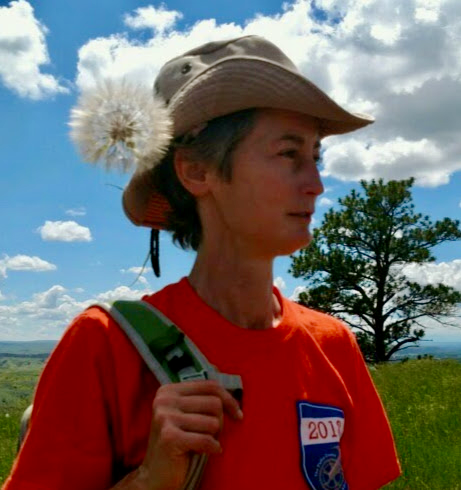
Beekeeper and Educator
Anne lives in Greenwich, NY and since 2019 has been Betterbee's Head Beekeeper, teacher, and videographer (catch her on Betterbee's YouTube channel!). She first got bees in 1989 while getting a Biology degree, and like most of us, she was a "bee-haver" for just a few years, until she became a member of her local beekeeping club (the Southern Adirondack Beekeepers Association, or SABA), where she learned a lot from members and through club activities.
Anne became invaluable to SABA's operation and led the Annual Seminar and Bee School for many years. Beekeeping associations are so valuable to us because of the speakers and events, but also because of the casual networking, support, and mentoring that comes about when people find a group near them.
She became an EAS Master Beekeeper in 2002 and is still learning to this day. In her limited spare time, she reads sci-fi and rides her bicycle.
