Wintering with Anne Frey (264)
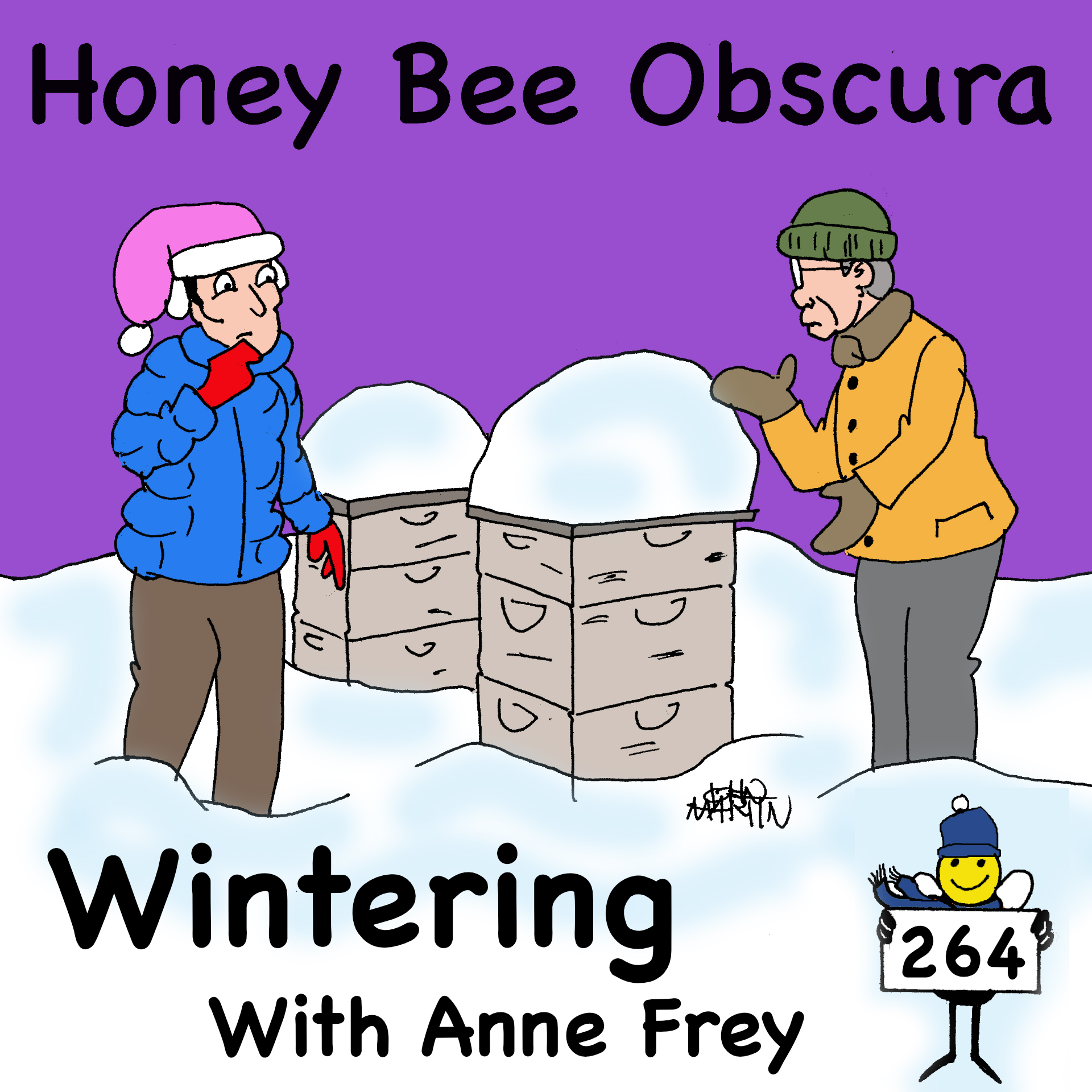
Jim Tew and Anne Frey talk plainly about wintering bees—insulation, emergency feeding, ventilation myths, and what actually helps colonies survive deep winter cold as the new year begins.


In this New Year’s Day episode of Honey Bee Obscura, Jim Tew is joined by Anne Frey for a timely and practical conversation about wintering honey bee colonies during extended cold spells. As winter settles in across much of North America, Jim and Anne focus on what beekeepers can—and cannot—do during deep winter to support colony survival.
The discussion centers on insulation, emergency feeding, and realistic expectations when temperatures plunge. Anne explains why it’s not “too late” to add insulation, how minimal disturbance compares to the consequences of starvation, and why proactive feeding decisions often matter more than perfect timing. Together, they explore how clusters respond to disturbance, why insulation at the top of the hive plays a critical role in managing condensation, and how beekeepers can make calm, informed choices even in the coldest months.
Jim and Anne also examine ongoing debates around ventilation versus condensing hives, drawing on observations from wild colonies, research by Tom Seeley, and years of hands-on experience. The conversation widens to include polystyrene versus wooden hives, winter behavior in northern versus southern climates, and the delicate balance between insulation, solar gain, and cleansing flights.
Grounded in plain talk and practical experience, this episode offers reassurance, perspective, and actionable guidance for beekeepers wintering colonies as one year ends and another begins.
______________________

Thanks to Betterbee for sponsoring today's episode. Betterbee’s mission is to support every beekeeper with excellent customer service, continued education and quality equipment. From their colorful and informative catalog to their support of beekeeper educational activities, including this podcast series, Betterbee truly is Beekeepers Serving Beekeepers. See for yourself at www.betterbee.com
______________________
Honey Bee Obscura is brought to you by Growing Planet Media, LLC, the home of Beekeeping Today Podcast.
Music: Heart & Soul by Gyom, All We Know by Midway Music; Christmas Avenue by Immersive Music; original guitar music by Jeffrey Ott
Cartoons by: John Martin (Beezwax Comics)
Copyright © 2025 by Growing Planet Media, LLC

Episode 264 – Wintering with Anne Frey
[music]
Dr. Jim Tew: Hey listeners, it's time again to talk about something to do with beekeeping here with Jim Tew at Honey Bee Obscura. I got my good co-host friend, Anne Frey, from Betterbee. Anne.
Anne Frey: Hi, Jim. I'm glad to be here again.
Jim: I'm always glad to have you. You give me outside thoughts, different perspectives. It's just good to talk to someone besides talking to myself all the time. Is it as cold where you are as it is here? We're having a real cold snap right now.
Anne: Here it's about 27. We're going to get a little warmer the next few days. It'll be fine to do OA vape. We think it's getting super warm when it gets to be 40 degrees. I know people in other areas think that that's crazy cold, but for us, it's a little break.
Jim: Listeners, I want to talk about this because it's what's happening right now. It's relevant. It's cold. Even in some of the southern states, it's been cold. [music] I'd like to talk about it. Anne, are you okay with talking about coldness and what we can do about it, if anything?
Anne: Yes, it's winter. It sounds like a good topic.
Jim: Listeners, I'm Jim Tew, and I come to you here once a week at Honey Bee Obscura, where I try to talk about something you do with plain talk beekeeping. Anne is with me today. Anne, say hi.
Anne: Hi, Jim. Hi, everybody.
Jim: All right. That's official. We're here.
[music]
Introduction: Welcome to Honey Bee Obscura, brought to you by Growing Planet Media, the producers of the Beekeeping Today podcast. Join Jim Tew, your guide through the complexities, the beauty, the fun, and the challenges of managing honey bees. Jim hosts fun and interesting guests who take a deep dive into the intricate world of honey bees. Whether you're a seasoned beekeeper or just getting started, get ready for some plain talk that'll delve into all things honey bees.
Jim: Anne, I watched these polar vortices and all these things, and I try to understand the weather map. The deeper you get into it, the more I realize that I don't understand any of this about the three-dimensional effect of upper air currents and the Gulf Stream, and why it's sweeping down across Ohio. It has been a real snowy, cold November and December. I went out in a previous podcast, and I just played with my hives. I took a stethoscope out, and I listened to the hives. Tell which ones were alive, and one was already gone.
This is asking a lot. We can talk about wintering biology, but this is really a tough way to go. There's nothing you can do about it that I know of. Can you do anything about midwinter, deep winter, deep freeze beekeeping?
Anne: I wouldn't say that if you skipped insulating in the fall that you can't insulate. You can certainly put a rigid rectangle of Styrofoam on the top of your hive, outside the cover, inside, between the covers. You can wrap at any moment that you want to. It's not too late. I see insulation is usually grouped with things as people get ready for winter in the fall. No, I wouldn't say it's too late to do something like that right now.
Jim: I do agree with that, but I'm wondering, as you were talking, there's all that fiddling and fumbling around and scratching and scraping, putting the insulation on and moving. How much does that agitate? How much would the colony jack up the temperature because they're trying to prepare for a threat, and it's just us putting insulation on?
Anne: I think you definitely need to be as quiet and careful as you can. Studies have been done of what the cluster does when a person taps on the hive, which is a way that people sometimes do if they want to check them if they're alive. There's a tiny pause and this little flinch of wing movement. Then it stops, and it's all over in about a half a second. That's what they do when you tap on it with one finger. They're pretty steady. When you do something really big, like move your hives to another bee yard, that's going to really get them moving around, breaking the cluster.
I would not recommend a major thing like that. I wouldn't recommend ever pulling frames up out of it. I think laying insulation on or wrapping them is such a minimal rustling, or adding on and restrapping. I wouldn't worry about that at all.
Jim: There's also the concept of emergency feeding, which is always desperate, but if you want to put on some dry feeder or something, you've got to take the top off, and the bees have to really know that you're there, but you, the beekeeper, have to decide that it's worth the disruption to the colony.
Anne: If you go out and you're doing a little walk in the winter, and you just grab the strap and tip the hive a little to feel how heavy it is. Then put it back down gently, and you feel that it's as light as an empty hive that you just put a package in, or something like that, that's too light. Believe me, starving to death is worse than having the bees on the outside of the cluster get cold for 30 seconds while you whop in 10 or 15 pounds of sugar or winter patties, because starving to death is permanent.
Jim: That's going to be a mess in just a few months when it all thaws out. It's, unfortunately, common. Maybe routine's a better word than common.
Anne: What's routine?
Jim: The winter colony deaths.
Anne: It happens mostly at the end of winter if it didn't already happen in October. They're going to live on until the end of winter, probably, and possibly starve when they start to really rev up their brood production and activity. I think that at the end of winter is when I'm the most worried about starvation.
Jim: I'm on board with that. It's so disappointing to see bees come all the way and to almost fruit bloom and then after they've made it through the vicious winter, through all this super cold, to die literally in sight of the spring season starting. Some colonies seem to do it every year. I guess it's a management issue on my part, on them not having enough feed.
Anne: Ironically, sometimes the strongest, biggest colonies starve the fastest because they're just roaring through the remaining food that they have. I would say if you're going into fall, mid-fall, and you know you have a very big colony, I would definitely proactively either leave a box of honey on it or give it some winter emergency feed right then. When they get to the top of their top box, they'll find that there. You don't have to wait until it's frigid in February to give them this food. Proactive is a fine way to deal with things instead of reactive.
Jim: I don't know how to respond to that other than I agree with you. At the time, just give it your best guess. We are trying to supplement what bees would be doing in nature. Just to our advantage for pollination and honey production and all, we're really trying to do is just help them. They're in our box under our design.
Anne: Under our care.
Jim: Under our care. We've committed to trying to help them with the shortages of their hive design that they probably wouldn't do themselves.
Anne: It's undoubtedly true that bees in trees out in the wild that are not under any beekeeper's care, a bunch of them starve during the winter. It's not like we can count all of them. We're not all Tom Seeley checking the trees year after year. We have some of the bees under our care and not letting them starve or giving them some top insulation at the minimum is something that we can do.
Jim: I think it helps, but let's take a break and come back and pick up on this insulation subject.
[music]
Betterbee: For more than 45 years, Betterbee has proudly supported beekeepers by offering high-quality, innovative products providing outstanding customer service. Many of our staff are beekeepers themselves and sharing education to help beekeepers succeed. Based in Greenwich, NY, Betterbee serves beekeepers all across the United States. Whether you're just getting started or a seasoned pro, Betterbee has the products and experience to help you and your bees succeed. Visit betterbee.com or call 1-800-632-3379. Betterbee your partners in better beekeeping.
Jim: Do you routinely insulate, and with what if you do?
Anne: At Betterbee, we do routinely, and also 365 days a year, we have a one-inch thick rigid foam rectangle between the inner and outer cover. Then last winter and this winter, I've also started doubling that up some and keeping track of that. On some, we wrap the sides of the hives, and we're keeping the data on that too. The standard is one sheet of insulation between the covers.
Jim: What do you insulate the sides with when you insulate?
Anne: It's always one of the two wraps that's sold by Betterbee. I think one is R5 insulation. It's the vinyl wrap. The other one is
of a puffy wrap with fiberglass insulation in it. I think that one has R8, possibly.
Jim: I will always intend to insulate. Do you think that insulation ever works against the bees? I know there's some other opinion, and I've tried to voice that opinion that sometimes insulation works against the bees. Have you heard that argument, that discussion, that concern?
Anne: I've heard a few different things connected to that, and it relates to two things: venting and solar gain. Venting is a concept that is going out of favor these past few years, and people are getting more into the idea of the unvented hive, or some people call it the "condensing hive." No upper entrance, no place for air to escape. I've heard it compared to just leaving a small attic window open in your house all winter. Why would you do that? If you compare it to humans, the idea of leaving that little tiny hole open all winter sounds crazy, but for decades, we were told that's the right thing to do.
It also acts as a little exit for them if the cluster rises and there's snow all over the entrance, but insulation, when there's a vent open, I'd say maybe they're negating each other. Another thing overly insulating might do is it would make the cluster not realize that the outdoor temperature had risen high enough to go out on cleansing flights and relieve their bowels. I know someone who has some wooden hives and some polystyrene hives. She noticed that on the days that were just in the 40s, the wooden ones would wake up and perk up and go on cleansing flights, but the live healthy hives in the polystyrene, they would not. I think it's because they were not aware of the rising temperatures outdoors.
Jim: The sunlight energy didn't get through the insulation quickly enough.
Anne: Yes, that's what I meant when I mentioned solar gain really quickly a few minutes ago.
Jim: I've been hearing that for years. We haven't talked about the beekeepers in warm areas who don't have to deal with all this cold and snow. What would happen if they had insulated hives during the summer in North Florida, South Georgia, where it gets to be 95, 100?
Anne: It's not always adding a wrap to your hive. You might have just bought a polystyrene hive, and you're not going to change that when spring comes. If you're in the South or the North with a polystyrene hive, you have it for the whole year. What's it like in the South with polystyrene? I don't know, maybe it's easier on the bees at first, but I could see that if it got above the temperature they wanted, like 95 or so inside, if it got higher than that outside, would it be harder for them to keep their temperature low? I don't know, or would it be easier?
Jim: Everything's a question. Do they have access to water? How far away is water? Can they bring it back, and can they condense the temperature and cool it down? Does the insulation help them hold the inside temperature at around 95 to 97 degrees Fahrenheit when it's 100 to 105, and they're sitting in the sun? I don't know. All the houses in the South are now insulated.
Anne: Also, you brought up water, which is an important detail too. It's easier to cool your hive if you have some water inside because it helps with the transfer of heat.
Jim: You got to have access to water. Normally, the South is humid, and I can't speak in general terms. Everybody has weather cycles, but thunderstorms in the afternoon was pretty common. I've never kept bees in expanded polystyrene when I was living in Alabama, North Florida, so I don't have any experience with that. Everything was wooden beehives.
Anne: You have experience of the South. I think what we need is some Southern listeners to chime in on this or write some comments.
Jim: About insulation or about Southern beekeeping in general or anything.
Anne: I was thinking specifically the idea of the polystyrene hives in the South, but sure, anything. Just comment on anything you like, folks.
Jim: That'll be fine too. There is something that I'm reluctant to bring up, and that's wax moth. This doesn't have anything to do with winterizing beekeeping, but polystyrene can really become a warm haven for wax moth and carpenter ants that'll tunnel all through that. It works well, but against those insects, is there anything that expanded polystyrene can do to forestall these insects burrowing through the expanded polystyrene?
Anne: I don't think so. Except the good two, three coats of paint on the outside. The kinds of chewing insects you're talking about, carpenter ants or the larvae of wax moths, the jaws on those things are amazing. Even carpenter bees probably would be glad to bite through something that wasn't hard pine wood. I've seen some polystyrene hives riddled with carpenter ant homes, colonies. I've seen the wax moth, little boat-shaped things carved into wooden hives. I have to say I've never seen it on polystyrene hives, but that might just be because I've seen proportionally so many fewer polystyrene hives than wood.
Jim: I've got polystyrene, and I can tell you that in my case, it hasn't happened that often. I've only got three, but it doesn't happen that often. I've gotten off the subject here, just get back on insulation, and wintering, and winter feeding. I always marvel, I just always marvel that those little insects can withstand that brutal cold that's out there. Now sometimes they don't, and sometimes they don't withstand it.
Anne: True, true. Somebody asked me one time, maybe when I was at my table at a farmer's market, "What do bees do in the winter?" I don't know. It just came out of my mouth, and it was like I was channeling some wise person, and I said, "They huddle, and they nibble, and they shiver." That's it. They're sharing their heat. They're vibrating their wings. They're nibbling on their honey, and that's basically their life during the winter if they cannot go outside, so that's a Northern winter.
The insulation above them certainly is going to take some of the stress off their life because they don't heat the whole inside of the cavity, but some heat is being lost off of the outside of the cluster, no matter how tightly that outside shell of bees is holding together. They take some stress off of them with an insulation board. It also prevents the condensation from their breath, freezing up there and then dripping down on them, which is what would happen with just a wooden cover exposed to the cold outside air. The insulation at the top, I'm just a firm believer on it. If you're going to have a little vent or no little vent, some of those bees are going to live, some of them are going to die.
Lots of different things do work, but why not take some of the stress off of them with something as easy as an insulation board?
Jim: That's an old, old recommendation that's fallen into disfavor of upward ventilation.
Anne: I have to say, Tom Seeley researched the trees and the bees out in Mother Nature. He says that they don't have upper entrances, and it's very, very all contained, and that's the average or the general rule. I'm guessing in some trees, there is a crack, or there's an upper entrance, trees are breaking or creaking. I don't think any of it's a hard and fast rule whether an entrance up there is going to make them die or live.
Jim: One of the things that was always infuriating, and it's off the subject of wintering in a way, I've got a nine-frame observation hive. Three deep frames, on three deep frames, on three deep frames. It's a huge colony because I wanted it to overwinter, and I got big ventilation screens about the size of a common jar lid. I put eight mesh hardware cloth, and those bees would work all summer to block every bit of those ventilation ports and seal them up, work themselves to death to close every one of them off.
Anne: Is the observation hive indoors like a 68-degree?
Jim: Yes. It's under an outdoor shed that's unheated. It's not populated right now. I had it in my lab for years. They would live through the winter about three-fifths of the time.
Anne: When they were actively trying to propolis all their vents up, was that when they were experiencing the normal outdoor temperatures?
Jim: Yes.
Anne: Shed or not?
Jim: Even when the weather was not cold, and they could make propolis, they were working on closing up.
Anne: They were preparing for winter in the summer.
Jim: I'm just throwing that out there, that when they had plenty of ventilation, they didn't want it, they wanted to close it up.
Anne: Good point.
Jim: I don't know if that adds anything to winter ventilation or the lack of it or not.
Anne: In a way, it shows that there's things the bees try to do to get themselves ready for winter. We're also trying to help them by observing
what they do and not working against it. It's also true that in lots of hives I used to keep with the upper ventilation slot in the inner cover just exposed under the overhang of the outer cover, the bees would not cork it up. They might put a lot of propolis down at their big bottom entrance and have little stalactites or walls of propolis trying to close that down. The upper one, it's a rarity for them to shut that right off, though they might shrink it down.
They'll sculpt it and make it smaller. I think there's always a spectrum of what those bees do, all the way to what those other bees do. Some bees just use tons of propolis, and some don't. Some bees live whether you abuse them or help them out, some bees seem to want to die no matter what you do.
Jim: I'm out of time. We've talked about insulation and just bees in the cold weather and bees in warm weather. Anne, hang on here, I want to ask you a question. That question I wanted to ask you is: Are you going to be at the North American Honey Bee Expo in January?
Anne: Yes, I am. I'm going to be at the expo.
Jim: I'm going to be there too. I was going to suggest to the listeners who are attending that meeting that they stop by. I think the Beekeeping Today booth is right across from-
Anne: From the Betterbee booth.
Jim: -the Betterbee booth. I got so much beekeeping going on here. I just wanted to say, I'm not really traveling as much as I used to be. I'm going to try to be at that meeting just to say hi to some of the people who've listened to our ramblings. If you're going to be there, it'll be good to see you in person instead of just seeing about a four-inch picture of you here on my monitor.
Anne: All right, I'm glad you're going to it. I'll see you at that booth.
Jim: Anne, thanks for talking to me, as I always enjoy it. I hope you do too. I appreciate Betterbee giving you the time off to chat with us.
Anne: I do enjoy it. I'll see you at the expo.
Jim: I wish you all the best.
Anne: Thanks, Jim.
[00:22:11] [END OF AUDIO]
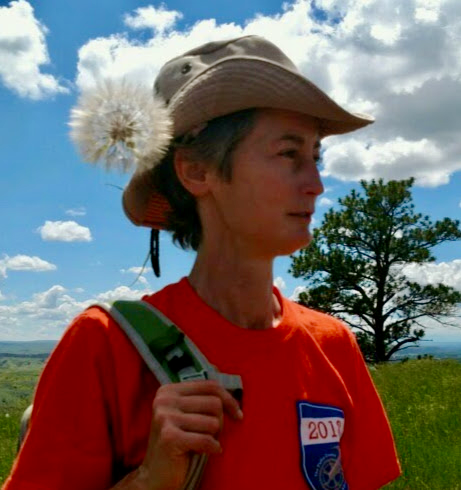
Beekeeper and Educator
Anne lives in Greenwich, NY and since 2019 has been Betterbee's Head Beekeeper, teacher, and videographer (catch her on Betterbee's YouTube channel!). She first got bees in 1989 while getting a Biology degree, and like most of us, she was a "bee-haver" for just a few years, until she became a member of her local beekeeping club (the Southern Adirondack Beekeepers Association, or SABA), where she learned a lot from members and through club activities.
Anne became invaluable to SABA's operation and led the Annual Seminar and Bee School for many years. Beekeeping associations are so valuable to us because of the speakers and events, but also because of the casual networking, support, and mentoring that comes about when people find a group near them.
She became an EAS Master Beekeeper in 2002 and is still learning to this day. In her limited spare time, she reads sci-fi and rides her bicycle.
